Panasonic Air Conditioner Troubleshooting: A Homeowner’s Guide to Error Codes and Common Fixes
Your Panasonic split system or ducted unit has stopped working, and there’s a flashing light or a code on the remote you’ve never seen before. Before you book an air conditioning repair, there are a few things worth checking yourself. This guide walks you through the most common Panasonic air conditioner problems Australian homeowners run into, explains what those error codes mean, and helps you work out what you can fix at home and what needs a licensed professional.
Table of Contents
How Panasonic Error Codes Work
Panasonic air conditioners have a built-in self-diagnosis system. When the unit detects a fault, it shuts down and displays an error code. Depending on your model, the code appears on the remote control display, the indoor unit’s LED panel, or through the Panasonic Comfort Cloud app.
There are three main groups of error codes:
- H-codes cover hardware faults: sensors, motors, drainage, and communication issues. These are the ones you’ll see most often.
- F-codes relate to the refrigeration system, the compressor, and the power electronics. Most of these need a qualified technician.
- E-codes cover communication problems between system components and electrical faults. These come up more often in multi-split and ducted installations.
How to Retrieve an Error Code from Your Remote Control
If the timer light on your Panasonic indoor unit is flashing and the system won’t start, here’s how to pull the error code:
- Point the remote control at the indoor unit.
- Use a paperclip or pin to press and hold the small CHECK button (usually recessed at the bottom of the remote) for about five seconds.
- The display will show “- -“.
- Press the TIMER UP or TIMER DOWN button to scroll through stored error codes.
- When the indoor unit beeps, the code on the remote matches the stored fault. Write it down.
The remote returns to normal after about two minutes.
If your unit is connected to the Panasonic Comfort Cloud app, you can also check error codes there. Tap the notification icon (the “i” symbol) in the top-left corner of the app, then look under “Error messages.”
For Panasonic Ducted systems: The process is the same if your ducted system uses a wireless remote. Some ducted units use a wired wall controller instead — check your user manual for the fault retrieval process on your model. On Panasonic ducted outdoor units, you may also see a set of four red indicator lights on the PCB. The flash pattern corresponds to the error code.
Five Things to Check Before Calling a Technician
Many Panasonic air conditioner service calls turn out to be something straightforward. Before you book an air conditioning service call, run through these five checks.
1. Is the Power On?
It sounds obvious, but power supply issues are the most common reason a Panasonic AC won’t start. Check these three things:
- Switchboard: Open your fuse box and make sure the circuit breaker for the air conditioner is in the ON position. A tripped breaker sits between on and off — give it a firm reset. If it trips again within a few minutes, stop and call a licensed electrician. Repeated tripping signals an electrical fault.
- Isolator switch: Every split system and ducted Panasonic system in Australia has a rotary isolator switch near the outdoor unit. Make sure it’s switched on. These can get bumped off accidentally, especially after gardening or maintenance work.
- Power point (for small split systems): If your split system plugs into a wall outlet, check the outlet is switched on and the cord is firmly connected.
2. Power Cycle the Unit
Switching the system off and back on clears temporary electronic glitches caused by power fluctuations or sensor noise.
Turn the air conditioner off at the isolator switch (not just the remote). Wait at least 60 seconds, then switch it back on. If the error code doesn’t come back, the fault was likely a one-off glitch.
If you prefer, you can also use the AC reset button on the bottom of your remote control. Press it with a paperclip to reset the remote itself.
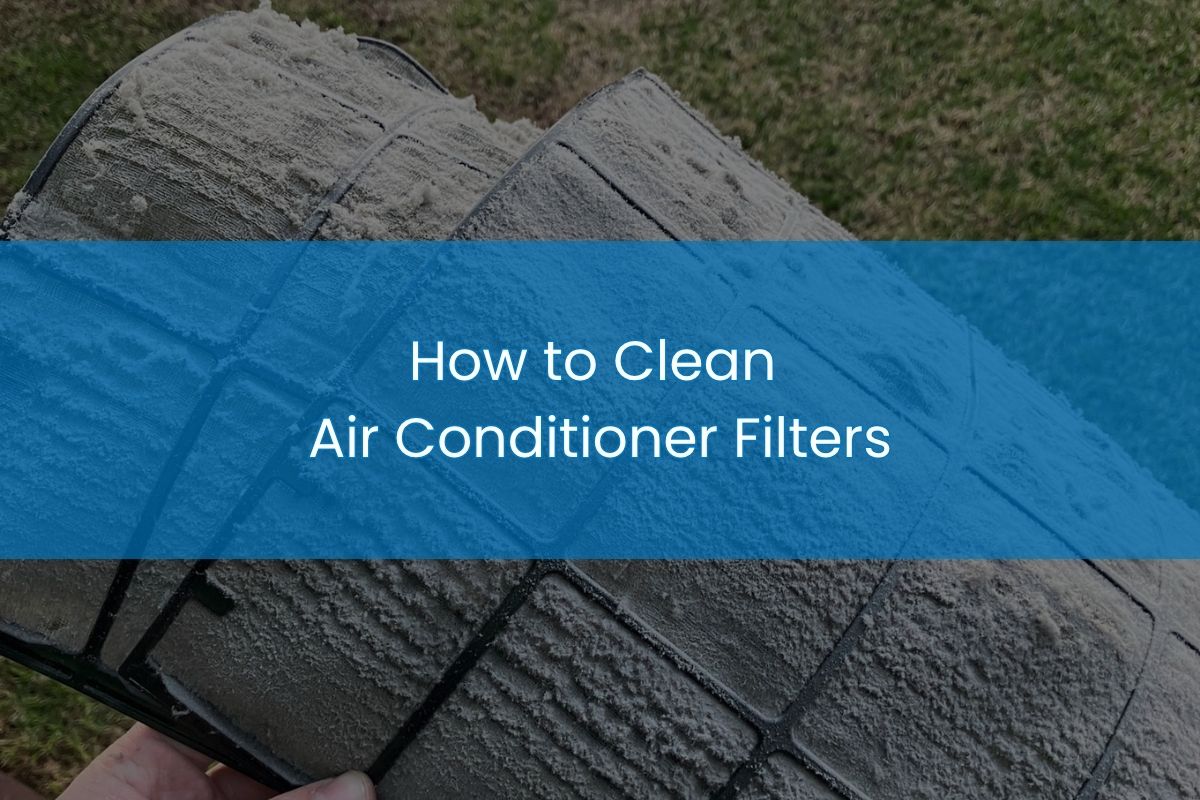
3. Clean the Filters
Dirty filters cause a surprising number of Panasonic error codes, including H98, H99, and F95. Restricted airflow makes the system work harder, overheat, or freeze up. All of which trigger a safety shutdown.
To clean the filters:
- Open the front panel of the indoor unit (lift the panel up on split systems).
- Slide or unclip the mesh filters.
- Wash them under lukewarm running water. Use a soft brush if they’re heavily clogged.
- Let them dry completely before refitting.
In dusty environments or homes with pets, Panasonic recommends cleaning filters every two weeks.
Ducted systems: The return air grille filter collects dust quickly, especially if the system runs often. A completely blocked return air grille can trigger airflow protection on ducted units faster than a filter issue on a split system. Pull the filter out, wash it, dry it, and refit it.
4. Check Around the Outdoor Unit
Leaves, spiderwebs, grass clippings, and general debris can block airflow around the outdoor unit. This causes the condenser to overheat and can trigger high-pressure error codes like F95 and H98.
Walk outside and check that nothing is blocking the unit. Clear at least 300mm of space around all sides. If the fan isn’t spinning when the unit is running, check for the plastic housing that covers the fan for damage, and that nothing is physically jammed in the blades.
5. Check the Remote Control Batteries
If the remote display is blank or faded, the batteries are likely flat. Replace them with fresh ones and try again. If the display works but the unit doesn’t respond, make sure you’re pointing the remote at the indoor unit’s sensor (the small receiver window on the front panel).
The Most Common Panasonic Error Codes Explained
Here is a breakdown of the most common error codes Melbourne homeowners encounter most often on Panasonic split systems and ducted units.
H00 Means No Fault Detected
If your self-diagnosis returns H00, the system thinks everything is fine. If the unit still isn’t performing properly, the issue may be something other than an internal fault. Consider things like an undersized system, incorrect settings, or an external airflow problem. Check your remote settings (mode, temperature, fan speed) and make sure nothing is blocking the indoor or outdoor unit.

H11 is a Communication Error Between Indoor and Outdoor Units
This is one of the most common Panasonic error codes. It means the indoor and outdoor units have lost communication with each other.
What could cause it: A loose or damaged wiring connection between the indoor and outdoor units. A faulty control board (PCB) on either unit. On multi-split and ducted systems, a cabling fault in the interconnecting wiring is more likely.
What to try: Power cycle the system at the isolator (see point 2 above for instructions). If H11 comes back, this needs a technician to inspect the wiring and PCBs.
H14, H15, H16, H17 are Sensor Faults
These codes all point to temperature sensor problems:
- H14 – indoor air temperature sensor (open or short circuit)
- H15 – compressor temperature sensor
- H16 – low current on the outdoor unit (could also indicate low refrigerant)
- H17 – suction pipe temperature sensor
What to try: Power cycle the unit (see point 2 above for instructions). A one-off sensor glitch may clear. If the code returns, a technician needs to test and likely replace the faulty sensor.
H19 is an Indoor Fan Motor Fault
The indoor fan motor is locked or not spinning.
What to try: Turn the system off and check if anything is physically obstructing the fan barrel (you may need to remove the filter and look inside the indoor unit). If the fan is clear and the code persists, the fan motor or its capacitor likely needs replacing. This is a technician job.
H97 is an Outdoor Fan Motor Problem
Similar to H19 but for the outdoor unit. The outdoor fan blades may be jammed by debris.
What to try: Switch off at the isolator. Check the outdoor fan for obstructions such as sticks, leaves, or loose objects. Clear anything you find, then restart. If the code returns, the outdoor fan motor needs professional attention.
H98 is an Indoor Unit High Pressure Protection Code
The system has detected excessive pressure on the indoor side, usually because the heat exchanger can’t release heat properly.
What could cause it: Dirty filters, a blocked indoor unit, or restricted airflow around the indoor unit (furniture pushed too close, curtains covering the return air).
What to try: Clean the filters. Make sure the indoor unit has clear airflow. Do not keep resetting and running the system if H98 returns. Repeated high-pressure events can cause progressive compressor damage. Switch off at the isolator and book a service.
H99 is an Indoor Heat Exchanger Freeze Protection Code
The indoor coil has started to ice up, so the system has shut down to protect itself.
What could cause it: Dirty filters (most common), low refrigerant, or a sensor fault.
What to try: Clean the filters. If the code clears after cleaning and a power cycle, dirty filters were the cause. If it returns, the system likely has a sensor issue that needs a licensed technician with gauges to diagnose. You can see the H99 error code on the remote in our image on this page. In this case, the PCB board and indoor temperature sensor needed replacing (under warranty by Panasonic).

F91 is a Refrigeration Cycle Fault
This indicates the refrigerant system isn’t performing as expected. Common causes include low refrigerant from a leak, a blocked expansion valve, or a closed service valve (common after recent servicing or relocation).
What to try: Nothing at home. F91 requires a licensed technician to connect refrigerant gauges and diagnose the fault. In Australia, only technicians with an ARCTick Refrigerant Handling Licence can legally handle refrigerants.
F93 is a Compressor Rotation Failure
The compressor isn’t spinning. You may hear a loud grinding noise or the outdoor unit may vibrate and shut down.
What to try: Switch off immediately. Do not keep restarting the system. Running a faulty compressor causes further damage. Call a technician. The compressor, its capacitor, or the outdoor PCB may need replacing.
F95 is a High Pressure Protection Code for the Outdoor Unit
The outdoor unit control board has detected a high-pressure condition.
What could cause it: Blocked condenser coil (outdoor unit covered in debris), restricted airflow, a faulty pressure sensor, or a malfunctioning expansion valve.
What to try: Clear any debris from around the outdoor unit. Make sure the fan is spinning freely. If the code returns, this needs professional diagnosis.
F99 is a DC Protection Fault
A serious electrical fault on the outdoor unit. Possible compressor jamming, transistor module failure, or current sensor fault on the outdoor PCB.
What to try: Nothing. Switch off at the isolator and call a technician. This is not a DIY repair.
P29 is an Inverter Compressor Wiring or DCCT Fault
The outdoor unit’s control board cannot detect the compressor running correctly. Either the wiring between the inverter board and compressor is damaged or disconnected, or the DC current transformer (DCCT) that monitors compressor operation has failed. This code comes up more often on multi-split systems than single split systems.
On multi-split systems where multiple indoor units share one outdoor unit, the compressor works harder and the DCCT is under more consistent load. This is a fault that can develop after months of normal operation, and if your air conditioner is still under warranty, could indicate a warranty repair is needed.
What to try: Nothing at home. Switch off at the isolator and call a licensed technician. The outdoor PCB, compressor wiring harness, and DCCT sensor all need to be tested. If your system is still under warranty, lodge the claim with Panasonic directly. This is a component-level fault, not something caused by installation or maintenance. If we installed your air conditioning, we can assist with organising the warranty claim.

P29 error showing on a Panasonic wall controller
E01 is a Communication Error Between Outdoors and Indoors
Similar to H11, but triggered from the outdoor unit side. Common in multi-split and ducted systems where multiple indoor units are connected.
What to try: Power cycle at the isolator. If it persists, the wiring between units needs to be inspected by a technician.
Troubleshooting Issues Without an Error Code
Sometimes your Panasonic air conditioner misbehaves without displaying a fault code. Here are the most common scenarios.
The Unit Runs But Doesn’t Cool (or Heat) Properly
Check the mode. Make sure the remote is set to COOL (snowflake icon) for cooling or HEAT (sun icon) for heating, not FAN or DRY. This catches more people than you’d think.
Check the temperature setting. In cooling mode, the set temperature needs to be lower than the room temperature. In heating mode, it needs to be higher. If the room is already at or close to the set temperature, the compressor won’t kick in.
Check the filters. Dirty filters reduce airflow dramatically. The system may technically be running, but the room never reaches temperature because not enough air is moving across the coil.
Undersized system. If the room has always been hard to cool or heat, the system may be too small for the space. A 2.5kW split system won’t cool a large open-plan living area on a 40°C day, regardless of how clean the filters are.
The Unit Is Leaking Water
Split systems: A small amount of condensation on startup is normal. Consistent dripping or pooling usually means a blocked condensate drain line. The drain hose runs from the indoor unit to an outside drain point. Over time, algae, dust, and debris can block it. A technician can flush the drain line with compressed air or a wet vacuum.
Ducted systems: Water leaks from a ducted system can be harder to trace. The drain pan under the indoor unit in the ceiling space can overflow if the drain is blocked, or the pan itself can corrode over time. If you notice water stains on the ceiling, switch off the system and book a service.
We cover this further in our post why is my aircon leaking water.
Strange Noises
Cracking or popping on startup: Normal. Plastic panels expand and contract as the unit heats up or cools down.
Gurgling or bubbling: Usually the sound of refrigerant moving through the pipes. This is normal, especially just after the system starts or stops. If it’s constant and loud, it can indicate a refrigerant charge issue.
Rattling or vibrating: This usually means something is loose, like a panel clip, mounting bracket, or debris inside the unit. Switch off and check for anything obviously loose before calling a technician.
Grinding or screeching: Turn the unit off immediately. This usually indicates a failing fan motor bearing or a jammed compressor. Call a technician.
The Unit Short Cycles (Turns On and Off Repeatedly)
Short cycling puts strain on the compressor and increases your energy bills. Common causes include dirty condenser coils (outdoor unit), a faulty thermostat, low refrigerant, or an oversized system for the space. Clean the outdoor unit and check your filters first. If the problem continues, book a service.
Panasonic Ducted Air ConditioningTroubleshooting
Panasonic ducted systems share the same error code framework as split systems, but there are a few extra things that apply to ducted installations.
Zone Controller Issues
If your ducted system heats or cools some rooms but not others, check the zone controller. Zones may have been accidentally closed, or the zone controller itself may have a fault. Most Panasonic ducted systems in Melbourne homes use a wall-mounted zone controller. Check that all the zones you want are set to open.
If only one or two zones are open and the system is trying to push all its capacity through a small number of outlets, the increased static pressure can trigger airflow protection and shut the system down.
Blocked Return Air Grille
A completely blocked return air grille on a ducted system causes problems faster than a dirty filter on a split system. The system can’t draw in enough air, the coil freezes or overheats, and it shuts down on protection. Make sure nothing is sitting on or blocking the return air grille – you’d be surprised how quickly dust, cobwebs and pet hair block these.
Ductwork and Insulation
If your ducted system has always struggled to reach temperature in certain rooms, the issue may not be the unit itself. Damaged or poorly insulated ductwork in the ceiling space loses a significant amount of heating or cooling capacity before the air reaches the room. A disconnected flex duct, crushed duct runs, or deteriorated insulation are all common issues.
Wired Controllers Not Responding
Some Panasonic ducted systems use wired wall controllers rather than wireless remotes. If the controller screen is blank, check the wiring at the back of the controller and at the indoor unit in the ceiling. A loose connection can cut communication entirely. If the screen is on but the system won’t respond, try switching the system off at the isolator for 60 seconds and restarting.
E04 is a Common Wired Controller Fault Code
An E04 error code means the indoor unit has failed to pick up a communication signal from the outdoor unit, usually within the first three minutes of powering on. This code appears more often on ducted or multi-split systems where a wired wall controller is in use.
This can be caused by a wiring fault on the indoor/outdoor communication line (short circuit, open circuit, or grounding issue). If you have recently reconfigured the controller, a duplicated indoor unit address could cause this. Other possible causes are a terminal resistor switch on the outdoor PCB set incorrectly across multiple units, missing EEPROM chip or an indoor address left as “undetermined” after a board replacement.
What to try: Power cycle at the isolator (see item 2 further up this page for how to do this). If E04 returns, this is a technician job. The communication wiring and unit addressing need to be inspected against the service manual for your model. If the system has recently had a PCB replaced or been reconfigured, let your technician know. The address settings are the first place to check.

When to Call the Team at ExtrordinAir
There’s a clear line between what you can safely check at home and what needs a professional.
You can handle:
- Cleaning filters
- Clearing debris from the outdoor unit
- Replacing remote control batteries
- Power cycling the system at the isolator
- Checking zone controller settings (ducted systems)
- Retrieving and noting down an error code
You need a licensed technician for:
- Anything involving refrigerant (topping up, leak testing, recovering gas)
- Electrical faults, PCB replacements, or wiring issues
- Compressor problems
- Fan motor replacements
- Any error code that keeps returning after you’ve cleaned the filters and power cycled the unit
In Australia, anyone who handles refrigerant must hold an ARCTick Refrigerant Handling Licence issued by the Australian Refrigeration Council. This is a legal requirement under the Ozone Protection and Synthetic Greenhouse Gas Management Act 1989. Handling refrigerant without a licence carries fines of up to $1,800 for individuals.
Please give us a call to book a technician or complete your details on the form below and we’ll call you to arrange a time. A breakdown callout fee is $200 (if the unit isn’t working at all and needs a diagnosis). Our standard air conditioning service starts at $250.
If you can, have the error code and your model number ready. The model number is on a sticker on the side of the indoor unit (split systems) or on the unit in the ceiling space (ducted systems). This lets the technician prepare the right parts and often resolve the issue in a single visit. If we installed your air conditioning we will have a record of this on file.
How to Prevent Problems in the First Place
Most Panasonic air conditioner faults are preventable with regular maintenance.
Clean the filters regularly. Every two to four weeks during heavy use. This single habit prevents the majority of H98, H99, and F95 faults.
Keep the outdoor unit clear. Trim vegetation back and clear leaves and debris at the start of each season.
Book an annual service. A licensed technician will check refrigerant levels, clean the coils, inspect the electrical connections, test the drainage, and pick up early signs of wear before they become expensive repairs.
Don’t ignore small issues. A unit that takes longer to reach temperature, makes a new noise, or drips water occasionally is telling you something. Addressing it early is almost always cheaper than waiting for a full breakdown.
Use the Comfort Cloud app. If your Panasonic unit supports Wi-Fi, setting up the Comfort Cloud app gives you instant error notifications on your phone. You’ll know about a fault as soon as it happens, even if you’re not at home.