What is the Largest Split System Air Conditioner?
Living in Melbourne means embracing variability. From scorching summer days to chilly, damp winters, having a reliable climate control system isn’t a luxury, it’s essential for year-round comfort. For heating and cooling a large living area, a converted loft area, or a spacious master bedroom, a smaller air conditioner might not cut it. This is where high-capacity, wall-mounted split systems come into their own, providing powerful and efficient heating and cooling for a single, significant space.
A wall-mounted split system air conditioner consists of two main parts: an indoor unit installed on a wall and an outdoor unit that houses the compressor. They are designed to expertly control the temperature of one specific room or open-plan area. In this article, we’ll talk about the largest size split systems, great for heating and cooling big spaces.
Key Takeaways
- In Australia, air conditioner capacity is measured in kilowatts (kW) for both heating and cooling.
- Melbourne’s climate demands a system with strong heating performance for winter and cooling for summer heatwaves.
- Key brands offering high-capacity (8.0kW and above) wall-mounted split systems in Australia include Mitsubishi Heavy Industries, Daikin, Fujitsu, and Panasonic.
- Correctly sizing the unit to your room is essential. Room dimensions, insulation, window size, and orientation are all important things to consider.
- Inverter technology is generally standard in 2026, which makes running costs more affordable.
- Professional installation by a licensed technician is mandatory and essential for safety, efficiency, and warranty compliance.
Table of Contents
- How Big Should Your Split System Be for a Melbourne Home?
- The Large Wall-Mounted Split Systems We Trust for Melbourne Homes
- The Features That Make a High-Capacity Split System Worth Buying
- Big Systems Are a Bigger Investment. Here’s How to Protect It
- Common Questions About High-Capacity Split Systems
- Contact Us

How Big Should Your Split System Be for a Melbourne Home?
When discussing air conditioner power in Australia, the key metric is the kilowatt (kW). This unit measures the heating or cooling output of the system. A higher kW rating signifies a more powerful unit capable of heating and cooling a larger space. For Melbourne homes, a system needs to be a true reverse-cycle workhorse, offering ample capacity for both bitterly cold mornings and sweltering summer afternoons.
Choosing the right capacity is a balancing act. The most obvious is room size, including ceiling height, as this determines the total volume of air that needs to be treated. However, other elements are just as important:
- Insulation: A well-insulated room with modern ceiling batts and wall insulation will hold its temperature far better, requiring a smaller capacity unit than a draughty, uninsulated space.
- Windows: The size, type, and orientation of windows have a massive impact. Large, single-glazed, west-facing windows will let in a huge amount of summer heat, demanding a more powerful air conditioner.
- Room Orientation: North-facing rooms receive sun for most of the day, increasing the cooling load in summer, while south-facing rooms are often cooler and may require more heating assistance in winter.
- Occupants and Appliances: The number of people who regularly use the room and the presence of heat-generating appliances like computers, televisions, or kitchen equipment add to the overall heat load.
It’s vital to size your unit correctly, and it’s for this reason that we don’t quote you an upfront price for your split system over the phone. We also strongly advise against choosing an air con installer who is prepared to do this.
An undersized system will struggle on extreme days, running constantly without ever reaching the target temperature, leading to high energy bills and premature wear. Conversely, an oversized unit will cool or heat the room too quickly and shut off. This rapid cycling, known as “short cycling,” is inefficient and poor at dehumidifying the air, which can result in a cool but clammy feeling.
The Large Wall-Mounted Split Systems We Trust for Melbourne Homes
When you need serious power for a large residential space, several reputable brands available in Australia offer high-capacity wall-mounted split systems. These units are in the 8.0kW to 10.0kW range, making them the biggest split system air conditioner options for single-room applications.
Mitsubishi Heavy Industries

Mitsubishi Heavy Industries (MHIAA) is well-regarded for its engineering. Their Bronte® series is particularly known for powerful airflow, making it ideal for large, open-plan living areas. The largest model in this range is a standout performer.
- Bronte® SRK100ZR-W (10.0kW): This model boasts an impressive 10.0kW cooling capacity and a massive 11.2kW of heating power, making it one of the most powerful residential split systems on the market. Its advanced fan blade technology is designed to deliver a long and wide airflow, ensuring air reaches every corner of a large room.
Daikin

Daikin is a market leader in Australia, known for reliability and a wide range of features. Their XL Premium and XL Series are specifically designed for conditioning large spaces.
- XL Premium Series FTXM95WVMA (9.5kW): This unit provides 9.5kW of cooling and 10.3kW of heating. It comes packed with features like built-in Wi-Fi, an intelligent eye sensor to save energy when the room is empty, and advanced air purification built in.
Fujitsu

A popular and trusted brand in Australia, Fujitsu offers high-capacity models in its Lifestyle range, combining performance with energy management features.
- Lifestyle Series SET-ASTH34KMTD-NXT (9.5kW): This model delivers 9.5kW of cooling and 10.3kW of heating capacity. It features a human sensor that adjusts operation for better efficiency, Wi-Fi control, and advanced filtration with Apple-Catechin and ion deodorisation filters.
Panasonic

Panasonic is known for integrating health-conscious features into its air conditioners. Their large capacity models offer powerful performance combined with air purification technology.
- Premium Inverter Z Series (9.0kW – 9.5kW): These units provide powerful heating and cooling while also featuring Panasonic’s nanoeX™ air purification system, which can operate independently to inhibit bacteria, odours, and allergens. They also come with built-in Wi-Fi for smart control.
The Features That Make a High-Capacity Split System Worth Buying
When investing in a large split system, looking beyond the raw kW capacity is essential to ensure you get a unit that is both effective and economical. Modern features play a huge role in performance and long-term satisfaction.
Energy Efficiency
For a powerful unit, energy efficiency is paramount to manage running costs. In Australia, look for a high star rating on the Zoned Energy Rating Label (ZERL). This label provides tailored efficiency ratings for different climate zones, so be sure to check the ‘Cold’ zone rating for Melbourne’s climate.
Inverter Technology
This is a non-negotiable feature in any modern air conditioner. An inverter acts like a car’s cruise control, constantly adjusting the compressor’s speed to maintain the desired temperature. This is far more efficient than older, non-inverter models that would run at full power and then switch off, leading to temperature fluctuations and higher energy use.
Heating Performance
For Melbourne’s chilly winters, the unit’s heating capability is just as important as its cooling. The Coefficient of Performance (COP) measures heating efficiency. The higher the COP, the more heat it produces for every kilowatt of electricity consumed. A high COP means lower heating bills.
Smart Features
Wi-Fi connectivity is now a common feature, allowing you to control your air conditioner from a smartphone app. This is incredibly convenient for pre-heating or pre-cooling a room before you arrive home. Some models also offer integration with smart home systems like Google Assistant for voice control.
Quiet Operation
A powerful air conditioner shouldn’t be excessively loud. Check the decibel (dBA) ratings for both the indoor and outdoor units. A low dBA for the indoor unit is particularly important for systems installed in bedrooms or main living areas.
Air Quality Features
Many premium models include advanced filtration systems that can capture dust, pollen, and other allergens, and even neutralise bacteria and viruses. Features like Panasonic’s nanoeX™ or Daikin’s enzyme blue filter can significantly improve indoor air quality.
Big Systems Are a Bigger Investment. Here’s How to Protect It
The performance and longevity of even the biggest split system air conditioner depend heavily on correct installation and regular maintenance. This is not a DIY project and requires certified professionals.
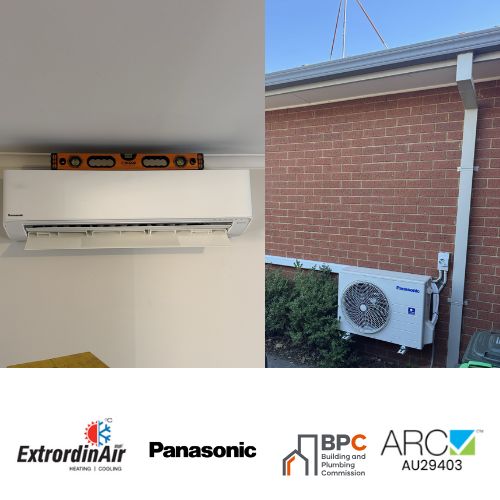
Professional Installation: In Australia, it is a legal requirement that split systems be installed by a licensed air conditioning technician. A professional installer will ensure the unit is correctly sized for your space, positioned for the airflow, and that all electrical and refrigerant connections are safe and secure.
Electrical Requirements: High-capacity units in the 8.0kW to 10.0kW range draw a significant amount of power. They almost always require their own dedicated electrical circuit from your home’s switchboard. An electrician must assess your existing wiring and install a new circuit if necessary to handle the load safely.
Outdoor Unit Placement: The location of the outdoor unit is also important. It needs to be installed on a stable, level base with plenty of clearance for airflow. Consideration should be given to potential noise levels and its proximity to your neighbours’ windows or outdoor living areas.
Regular Maintenance: To keep your large split system running efficiently, simple maintenance is key. You should clean the indoor unit’s filters every few months – more often if you have pets or live in a dusty area. Additionally, scheduling an annual service with a qualified technician is highly recommended. They will check refrigerant levels, clean the coils, and ensure the entire system is operating correctly, which is often a requirement for maintaining your warranty.
Common Questions About High-Capacity Split Systems
Can a large split system heat or cool multiple rooms?
No, a wall-mounted split system is designed to heat or cool a single, defined space. While some airflow may spill into adjacent areas, it will not effectively heat or cool separate rooms. For multi-room solutions, you would need to consider either multiple individual split systems or a multi-head split system, which connects several indoor units to a single, more powerful outdoor unit.
Are larger split systems more expensive to run?
A larger unit will naturally consume more power than a smaller one when running at full capacity. However, if it is correctly sized for the room, it will reach the target temperature efficiently and then ramp down, thanks to inverter technology. An undersized unit, by contrast, would run constantly at maximum power, likely using more electricity over time.
What is the typical lifespan of a split system air conditioner?
With regular maintenance and correct use, a quality split system from a reputable brand should last between 10 to 15 years. Factors that can influence this include the harshness of the local environment and how frequently the unit is used.
How often should a split system be serviced?
It is recommended to have your split system professionally serviced once a year. This ensures it runs at peak efficiency, helps identify potential issues before they become major problems, and is often a condition of the manufacturer’s warranty.