Aircon Energy Ratings for Melbourne’s Climate – How to Read the Star Labels
When you’re shopping for a new air conditioner in Melbourne, the price tag and the brand name tend to grab your attention first. But the small label stuck to the front of every unit tells you something the price tag never will. How much the system will cost you to run, year after year.
That label is the Zoned Energy Rating Label (ZERL), and it’s one of the most useful tools available to Melbourne homeowners choosing air conditioning. Understanding how to read it properly can save you hundreds of dollars over the lifetime of your air conditioner and help you choose a system that genuinely suits Melbourne’s climate.
Table of Contents
- What Is the Zoned Energy Rating Label?
- How to Read Energy Star Ratings and the ZERL Label
- Why Heating Efficiency Matters More Than Cooling in Melbourne
- What About Ducted Air Conditioning?
- Minimum Energy Performance Standards: The Baseline
- Inverter vs Non-Inverter Technology
- Getting the Most from a High-Rated System
- How to Use the Energy Rating Calculator
- Frequently Asked Questions
- Need help choosing the right air conditioner for your Melbourne home?
What Is the Zoned Energy Rating Label?
The Zoned Energy Rating Label replaced the older, single-rating Energy Rating Label on most non-ducted household air conditioners registered from April 2020. The older labels are now fully phased out.
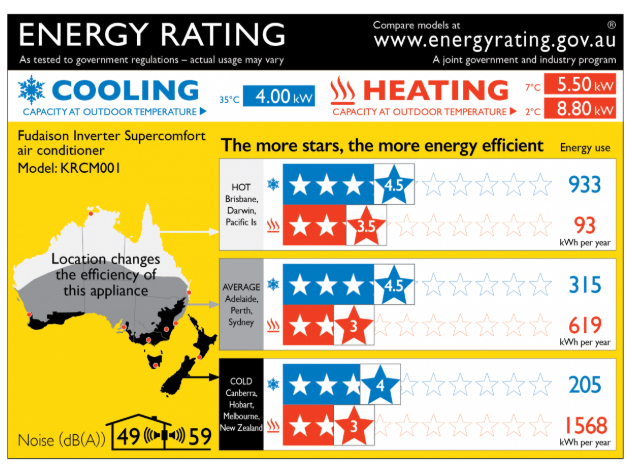
The key difference is that the ZERL doesn’t treat all of Australia as one climate. Instead, it divides the country into three distinct climate zones, and provides separate star ratings and energy consumption figures for each.
This matters because an air conditioner that performs brilliantly in Brisbane’s heat may be less efficient when it’s working hard to keep a Melbourne lounge room warm on a July evening. The ZERL shows you how each model performs under conditions that reflect where you live.
Australia’s Three Climate Zones at a Glance
| Zone | Reference Cities | What to Prioritise |
|---|---|---|
| Hot | Darwin, Townsville, Cairns | Cooling efficiency (blue stars) |
| Average | Sydney, Adelaide, Perth | Balance of cooling and heating efficiency |
| Cold | Melbourne, Hobart, Canberra | Heating efficiency (red stars) |
Melbourne sits in the Cold zone. That means if you’re comparing air conditioners for a home in Pascoe Vale, Preston, Strathmore or anywhere across the greater Melbourne area, you should be looking at the Cold zone column on every label you check.
How to Read Energy Star Ratings and the ZERL Label
The ZERL packs a lot of information into a compact label. Here’s what to look for and why each element matters when you’re choosing a system for your Melbourne home.
Star Ratings (Cooling and Heating)
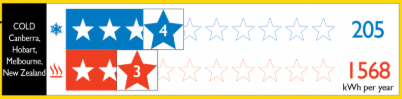
Star ratings range from 1 to 10 for both cooling (shown in blue) and heating (shown in red). The more stars, the more efficient the air conditioner is in that mode. Each zone has its own set of stars, so a unit might earn 4 stars for cooling in the Hot zone but only 3 stars in the Cold zone.
For Melbourne homeowners, the heating star rating in the Cold zone column deserves the most attention. Melbourne homes use their air conditioner for heating significantly more than for cooling over the course of a year, in some cases using around 75% more energy on heating than cooling. A unit with strong heating stars in the Cold zone will deliver real savings on your winter power bills.
Estimated Annual Energy Use (kWh)
To the right of each star rating, you’ll find the estimated annual energy consumption in kilowatt-hours (kWh) for cooling (blue figure) and heating (red figure) in each climate zone.
This is where you can calculate running costs. Multiply the kWh figure for your climate zone by your electricity rate to estimate what the system will cost to run each year. In Melbourne, residential electricity rates currently sit around 23 to 28 cents per kWh on a standard single-rate tariff, depending on your retailer and distribution zone.
Example: Comparing Running Costs in Melbourne
Using an average Melbourne electricity rate of 28 cents per kWh, here’s how two systems with different Cold zone kWh ratings compare over time.
| Unit A (Higher Rated) | Unit B (Lower Rated) | |
|---|---|---|
| Cold Zone Heating kWh/year | 850 kWh | 1,200 kWh |
| Cold Zone Cooling kWh/year | 200 kWh | 280 kWh |
| Total Annual kWh | 1,050 kWh | 1,480 kWh |
| Annual Running Cost (@ 28c/kWh) | $294 | $414 |
| 10-Year Running Cost | $2,940 | $4,140 |
In this example, the higher-rated unit saves around $120 a year, or $1,200 over a typical 10-year lifespan. That saving often more than covers the higher purchase price of a more efficient system.
You might also be interested in our blog post comparing gas and electric ducted heating running costs.
Output Capacity (kW)

The label shows the cooling capacity at 35°C outdoor temperature and the heating capacity at two outdoor temperatures: 7°C and 2°C. The 2°C figure is especially relevant for Melbourne winters, where early morning temperatures can drop well below 5°C. A unit that maintains strong heating output at 2°C will keep your home comfortable on the coldest mornings without running the compressor at full strain.
Noise Levels (dB)

The bottom of the label displays indoor and outdoor noise levels in decibels. Lower numbers mean quieter operation. This is worth checking if your outdoor unit will be close to a bedroom window or a neighbouring property. A common consideration in Melbourne’s closer-set suburban homes.

Why Heating Efficiency Matters More Than Cooling in Melbourne
It’s easy to focus on cooling performance when shopping for an air conditioner. The marketing often features images of families staying cool in summer, and it’s natural to think of an air conditioner as a cooling appliance first.
But in Melbourne’s Cold climate zone, most households use far more energy on heating than on cooling across the year. Melbourne’s summers are relatively mild compared to Sydney or Brisbane, while the winters are long enough that a reverse cycle system can run in heating mode from April through to October.
This means the red stars on the ZERL (the heating efficiency rating) have a bigger impact on your annual energy bill than the blue stars do. When comparing two similarly priced systems, prioritising the one with more heating stars in the Cold zone is one of the smartest moves a Melbourne homeowner can make.
Here’s some images of wall mounted split systems we’ve installed in Melbourne homes and how their star ratings compare:
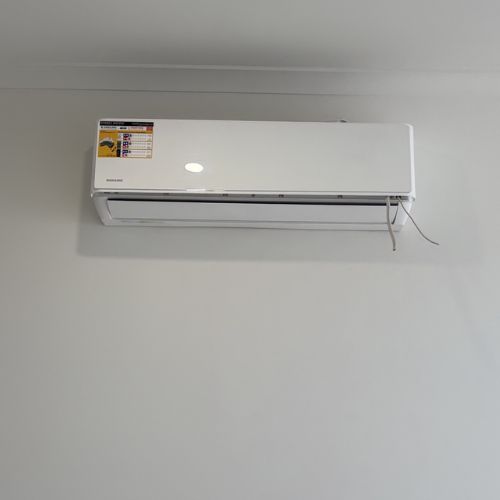
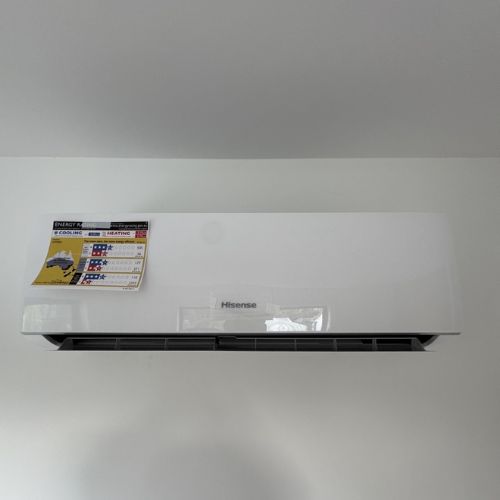
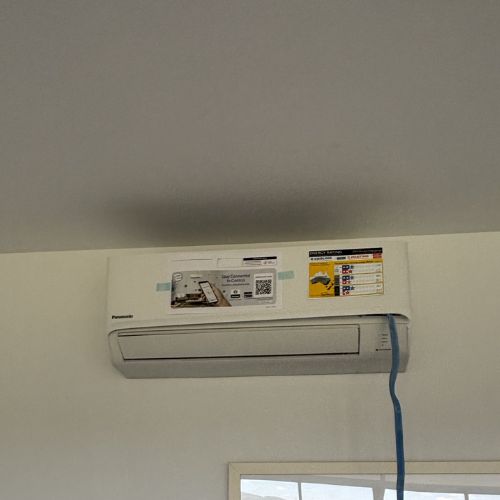
As you can see across the three brands (Bonaire, Hisense, and Panasonic) they all have 2 star heating ratings for Melbourne’s cold climate.
What About Ducted Air Conditioning?
The Zoned Energy Rating Label is mandatory for non-ducted household air conditioners, including wall-mounted split systems and window units. Ducted systems are not currently required to carry the ZERL, although manufacturers can choose to display one voluntarily.
If you’re considering a ducted reverse cycle system for your Melbourne home, ask your installer for the system’s Seasonal Energy Efficiency Rating (SEER) for heating and cooling. This gives you a similar measure of performance across different conditions. Your installer can also help you compare ducted brands based on estimated annual energy use for the Cold climate zone.
Minimum Energy Performance Standards: The Baseline
Every air conditioner sold in Australia must meet Minimum Energy Performance Standards (MEPS) under the Greenhouse and Energy Minimum Standards (GEMS) Act 2012. These standards set the lowest allowable efficiency level for air conditioners. Any unit that doesn’t meet the threshold cannot be legally sold.
MEPS are reviewed and updated over time, so the baseline efficiency of air conditioners available on the Australian market has steadily improved. Even a 1 or 2-star unit today is more efficient than many systems sold a decade ago.
That said, aiming for a higher star rating still makes a meaningful difference. The gap between a 2-star and a 5-star unit can mean 30–40% less energy consumption for similar cooling and heating output. These are savings that show up on every quarterly power bill.
Inverter vs Non-Inverter Technology
You’ll notice that modern split systems and ducted systems use inverter technology, and this directly affects their energy rating. An inverter air conditioner adjusts its compressor speed to match the heating or cooling demand in real time, rather than cycling on and off at full power.
This means an inverter system uses less energy to maintain a steady temperature, which is reflected in higher star ratings on the ZERL. Non-inverter units are becoming less common, but if you’re comparing an older model against a newer one, the difference in efficiency will be significant.
Getting the Most from a High-Rated System
A high energy rating only delivers its full potential when the air conditioner is correctly sized and properly installed. An oversized unit will short-cycle, wasting energy and wearing out components faster. An undersized unit will struggle to reach the set temperature and run at full load more often than it should.
Professional sizing takes into account your room dimensions, insulation, window orientation, ceiling height and local climate conditions. In Melbourne, where a home might face blazing afternoon sun in January and near-freezing mornings in July, getting the sizing right is essential.
Other ways to support your system’s efficiency include sealing gaps around doors and windows, using curtains or blinds to reduce heat transfer through glass, keeping filters clean, and scheduling regular maintenance to ensure the system runs as designed.
How to Use the Energy Rating Calculator
The Australian Government’s Energy Rating Calculator at calculator.energyrating.gov.au is a free online tool that lets you compare registered air conditioners side by side. You can filter by climate zone, capacity, brand and energy rating to find models that match your needs.
For Melbourne homeowners, set the calculator to the Cold climate zone and pay close attention to the estimated annual kWh for heating. This gives you the clearest picture of which system will cost the least to run during the months when your air conditioner is working hardest.
Frequently Asked Questions
What do the stars mean on an air conditioner?
The stars indicate energy efficiency. More stars mean the air conditioner uses less electricity to deliver the same amount of heating or cooling. Stars range from 1 to 10, and the ZERL shows separate star ratings for three Australian climate zones.
Is it worth paying more for a higher-rated air conditioner?
In most cases, yes. A higher-rated system costs less to run each year, and those savings compound over the 10 to 15-year lifespan of a typical air conditioner.
Which climate zone is Melbourne in?
Melbourne falls within the Cold climate zone on the Zoned Energy Rating Label. This means heating efficiency is especially important for Melbourne homes, as reverse cycle systems use significantly more energy for heating than cooling in this region.
Do ducted air conditioners have energy rating labels?
Ducted systems are not required to display the ZERL, although some manufacturers provide one voluntarily. Ask your installer for the system’s SEER and estimated annual energy use so you can make an informed comparison.
What is a good star rating for an air conditioner?
There’s no single number that applies to every situation, but in general, a system with 3.5 stars or above in your climate zone offers a solid balance of efficiency and value. Systems with 5 or more stars are among the most efficient on the market and offer the greatest long-term savings.