Rinnai Air Conditioner Fault Codes: Split, Ducted and Mini VRF Guide
When a Rinnai air conditioner stops and displays a combination of letters and numbers, the code is a diagnostic clue. It can point to a sensor, communication problem, electrical protection event, drainage issue or a fault in the refrigeration system.
The important catch is that Rinnai air conditioner fault codes are not universal. Rinnai has used different control platforms across its high-wall split, multi split, cassette, ducted and Mini VRF products. The same code can mean something different on another model, while newer products may use longer codes such as EH63, EL01, or PC00 instead of the older E1, F0, and P1 format.
Use this guide to understand what the display is telling you, but confirm the meaning against the manual for your exact indoor unit, outdoor unit and controller. If you don’t have this, please check the Rinnai downloads page where you should be able to download your user manual.
Safety first: Do not remove covers, test live electrical components or work on refrigerant pipework. R32 is a mildly flammable A2L refrigerant and refrigerant work must be carried out by a licensed technician. If you smell burning, hear an abnormal mechanical or electrical noise, see water coming from a safety drain, or a circuit breaker repeatedly trips, turn the system off and arrange service.
Table of Contents
Before looking up a Rinnai fault code
Record these details before resetting or switching anything off:
- the complete code, including every letter, number, dash and dot;
- whether the code is steady, flashing or alternating with another code;
- the model number from the indoor or outdoor unit rating label;
- which indoor unit or zone is affected on a multi split or Mini VRF system;
- the mode in use – cooling, heating, dry, fan or auto; and
- a clear photo or short video of the controller or display.
We suggest this because E1, EL01 and C21, for example, can all describe communication-related problems across different Rinnai air conditioners. They are not interchangeable codes.
Rinnai split system and multi split fault codes
EH, EL, EC and PC code family
The following covers the EH/EL/EC/PC-style code family used on Rinnai P/Pro-type high-wall systems and related multi-room equipment. Some Rinnai ducted products use the same control family. Match the prefix and the model before relying on the description; older J, T and other superseded Australian models may use a different code set.
| Code | What to do |
|---|---|
| EH00 or EH0R Indoor unit EEPROM or parameter error | Record the code and book a technician. The indoor control data or board may need testing. |
| EL01 is a communication error between indoor and outdoor units | Check whether the outdoor unit has power without opening any covers. If the code remains, arrange service. |
| EH02 is a zero-crossing signal detection error | Electrical/control-board diagnosis is required. |
| EH03 means the indoor fan speed outside the expected range | Turn the unit off. Check only for an obvious, safely accessible airflow obstruction; persistent faults need service. |
| EH30 is an indoor DC fan under-voltage protection code | Arrange electrical and fan-motor diagnosis. |
| EH31 is an indoor DC fan over-voltage protection code | Arrange electrical and fan-motor diagnosis. |
| EH60 is an indoor room-temperature sensor open or short circuit | The unit may continue with limited control on some models. Book service. |
| EH61 is an indoor evaporator-coil temperature sensor open or short circuit | Book service; the coil sensor and wiring need testing. |
| EH0B is a communication error between the indoor PCB and display board | Record the code and book service. Do not open the unit. |
| EH0C or EL0C means a refrigerant leak is detected | Stop the system, ventilate the area and arrange prompt service. Do not search for or repair a leak yourself. |
| FH0C is a humidity sensor open or short circuit | Arrange service if the code persists. |
| EC51 (older display: ECS1) is an outdoor EEPROM or parameter error | Outdoor control-board diagnosis is required. |
| EC52 (ECS2) is an outdoor condenser-coil sensor T3 open or short circuit. | Book a service. |
| EC53 (ECS3) is an outdoor ambient sensor T4 open or short circuit. | Book a service. |
| EC54 (ECS4) is a compressor discharge sensor TP open or short circuit | Stop repeated restart attempts and book service. |
| EC56 (ECS6) is an evaporator outlet sensor T2B open or short circuit. | Book a service. |
| EC07 means the outdoor fan speed is abnormal. | Keep the outdoor unit clear of obvious loose debris, without removing its guard. If the code remains, book service. |
| PC00 is an inverter power module over-current protection | Turn the system off and arrange service if it recurs. |
| PC02 is a compressor top-temperature or overload protection code | Let the system remain off. A technician should check airflow, electrical load, refrigerant conditions and the compressor. |
| PC03 relates to refrigeration-system pressure protection | Book a licensed air conditioning technician. |
| PC06 is a compressor discharge-temperature protection code | Stop repeated resets and book service. |
| PC08 is outdoor current protection | Electrical and compressor diagnosis is required. |
| PC0R is a condenser high-temperature protection code | Check for an obvious outdoor airflow blockage. If clear or the code returns, arrange service. |
| PC0F is a power-factor-correction module fault | Book a service. |
| PC0L means the outdoor ambient temperature is below the unit’s operating limit | This may clear as conditions change. If it appears in normal operating conditions, book a service. |
| PC10 is low-voltage protection code | If there has been a local power problem, wait for supply to stabilise. Recurring faults need an electrician or air conditioning technician. |
| PC11 is an over-voltage protection fault code | Turn the system off and arrange supply-voltage and unit checks. |
| PC12 is a DC-voltage protection code. | Book service. |
| PC30 is a high-pressure protection code. | Stop repeated restarts and book service. |
| PC31 is a Low-pressure protection code | Book a licensed technician; possible causes include a leak, restriction or another refrigeration fault. |
| PC40 is a communication error between the outdoor main controller and compressor drive | Book a service. |
| PC41 is a current-input detection protection code | Book a service. |
| PC42 is a compressor start error | Book a service. |
| PC43 is a compressor phase-loss protection on a three-phase unit | Turn the system off and arrange professional electrical diagnosis. |
| PC44 is a compressor no-speed protection code | Book a service. |
| PC45 is a compressor PWM/control-signal error | Book a service. |
| PC46 is a compressor speed fault code | Book a service. |
| PC49 is a compressor over-current protection code | Turn the system off and book a service. |
| PH90 means the Indoor evaporator coil temperature is too high | Check that filters and grilles are not blocked. Persistent faults need a service. |
| PH91 means the indoor evaporator coil temperature is too low | Check filters and airflow. If icing is visible or the code returns, turn the unit off and book service. |
| [ – – ] Two horizontal lines means there is an operating-mode conflict on a multi split system | Set all active indoor units connected to that outdoor unit to compatible modes. Heating cannot run at the same time as cooling. |
| NA means there is no recorded malfunction or protection and no fault is currently identified. |
Code: EH00 or EH0R Indoor unit EEPROM or parameter error
What to do: Record the code and book a technician. The indoor control data or board may need testing.
Code: EL01 is a communication error between indoor and outdoor units
What to do: Check whether the outdoor unit has power without opening any covers. If the code remains, arrange service.
Code: EH02 is a zero-crossing signal detection error
What to do: Electrical/control-board diagnosis is required.
Code: EH03 is an indoor fan speed error, meaning the fan speed is outside the expected range
What to do: Turn the unit off. Check only for an obvious, safely accessible airflow obstruction. If the fault remains, arrange service.
Code: EH30 is an indoor DC fan under-voltage protection code
What to do: Arrange electrical and fan-motor diagnosis.
Code: EH31 is an indoor DC fan over-voltage protection code
What to do: Arrange electrical and fan-motor diagnosis.
Code: EH60 is an indoor room-temperature sensor open or short circuit
What to do: The unit may continue with limited control on some models. Book service.
Code: EH61 is an indoor evaporator-coil temperature sensor open or short circuit
What to do: Book service; the coil sensor and wiring need testing.
Code: EH0B is a communication error between the indoor PCB and display board
What to do: Record the code and book service. Do not open the unit.
Code: EH0C or EL0C means a refrigerant leak is detected
What to do: Stop the system, ventilate the area and arrange prompt service. Do not search for or repair a leak yourself.
Code: FH0C is a humidity sensor open or short circuit
What to do: Arrange service if the code persists.
Code: EC51 (older display: ECS1) is an outdoor EEPROM or parameter error
What to do: Outdoor control-board diagnosis is required.
Code: EC52 (ECS2) is an outdoor condenser-coil sensor T3 open or short circuit
What to do: Book a service.
Code: EC53 (ECS3) is an outdoor ambient sensor T4 open or short circuit
What to do: Book a service.
Code: EC54 (ECS4) is a compressor discharge sensor TP open or short circuit
What to do: Stop repeated restart attempts and book service.
Code: EC56 (ECS6) is an evaporator outlet sensor T2B open or short circuit
What to do: Book a service.
Code: EC07 means the outdoor fan speed is abnormal
What to do: Keep the outdoor unit clear of obvious loose debris, without removing its guard. If the code remains, book service.
Code: PC00 is an inverter power module over-current protection code
What to do: Turn the system off and arrange service if it recurs.
Code: PC02 is a compressor top-temperature or overload protection code
What to do: Let the system remain off. A technician should check airflow, electrical load, refrigerant conditions and the compressor.
Code: PC03 relates to refrigeration-system pressure protection
What to do: Book a licensed air conditioning technician.
Code: PC06 is a compressor discharge-temperature protection code
What to do: Stop repeated resets and book service.
Code: PC08 is an outdoor current protection code
What to do: Electrical and compressor diagnosis is required.
Code: PC0R is a condenser high-temperature protection code
What to do: Check for an obvious outdoor airflow blockage. If clear or the code returns, arrange service.
Code: PC0F is a power-factor-correction module fault
What to do: Book a service.
Code: PC0L means the outdoor ambient temperature is below the unit’s operating limit
What to do: This may clear as conditions change. If it appears in normal operating conditions, book a service.
Code: PC10 is a low-voltage protection code
What to do: If there has been a local power problem, wait for the supply to stabilise. Recurring faults need an electrician or air conditioning technician.
Code: PC11 is an over-voltage protection fault code
What to do: Turn the system off and arrange supply-voltage and unit checks.
Code: PC12 is a DC-voltage protection code
What to do: Book service.
Code: PC30 is a high-pressure protection code
What to do: Stop repeated restarts and book service.
Code: PC31 is a low-pressure protection code
What to do: Book a licensed technician; possible causes include a leak, restriction or another refrigeration fault.
Code: PC40 is a communication error between the outdoor main controller and compressor drive
What to do: Book a service.
Code: PC41 is a current-input detection protection code
What to do: Book a service.
Code: PC42 is a compressor start error
What to do: Book a service.
Code: PC43 is a compressor phase-loss protection on a three-phase unit
What to do: Turn the system off and arrange professional electrical diagnosis.
Code: PC44 is a compressor no-speed protection code
What to do: Book a service.
Code: PC45 is a compressor PWM/control-signal error
What to do: Book a service.
Code: PC46 is a compressor speed fault code
What to do: Book a service.
Code: PC49 is a compressor over-current protection code
What to do: Turn the system off and book a service.
Code: PH90 means the indoor evaporator coil temperature is too high
What to do: Check that filters and grilles are not blocked. Persistent faults need a service.
Code: PH91 means the indoor evaporator coil temperature is too low
What to do: Check filters and airflow. If icing is visible or the code returns, turn the unit off and book service.
Code: [ – – ] Two horizontal lines means there is an operating-mode conflict on a multi split system
What to do: Set all active indoor units connected to that outdoor unit to compatible modes. Heating cannot run at the same time as cooling.
NA means there is no recorded malfunction or protection and no fault is currently identified.
Codes that can indicate temporary operating limits
Not every displayed message means that a component has failed. On this code family:
PH09 is the anti-cold-air function during heating;
LC01, LC02, LC03, LC05 and LC06 indicate compressor frequency is being limited by temperature, current, voltage or the power factor correction system;
LH00 indicates a frequency limit based on the indoor coil temperature; and
LH07 indicates a frequency limit requested by the controller.
The unit may resume normal operation when conditions stabilise. If a protection code stays on, returns frequently or comes with poor performance, arrange a diagnosis rather than repeatedly resetting the system.
Rinnai multi split mode-conflict codes: ER, — and P5
A Rinnai multi split has several indoor units connected to one outdoor unit, so the indoor units must request compatible operating modes. Depending on the product family, a conflict may appear as ER, — or P5.
For example, if the first indoor unit is heating and a second is set to cooling, the second unit may stop and show a conflict code. Set all active indoor units to heating, or set them all to cooling/dry as appropriate. Fan-only operation may also be limited by the controller logic. If the code remains after the modes match, record which units are affected and call a technician.
Rinnai inverter cassette split codes
If you have a Rinnai inverter cassette split system these codes apply to you. Don’t confuse these codes with wall mounted split systems, or ducted air conditioners.
| Code | What to do |
|---|---|
| E0 is an indoor EEPROM error | Record the code and arrange a technician. The indoor control board or its stored settings may require testing. |
| E1 is an indoor/outdoor communication fault | Confirm the outdoor unit has not been switched off and check for a tripped circuit breaker. Do not repeatedly reset a breaker that trips again. |
| E3 is an indoor fan-speed fault | Turn the system off and check the filter and visible air openings for blockages. If the code returns, the fan motor or control circuit needs testing. |
| E4 is an indoor room-temperature sensor error | Arrange service. The room-temperature sensor or its wiring may be faulty. |
| E5 is an evaporator-coil temperature sensor error | Check that the filter is clean, then arrange service if the code remains. The coil sensor requires professional testing. |
| EC is a refrigerant leak-detection system fault | Turn the system off, ventilate the area and arrange prompt service. Do not inspect or repair refrigerant components yourself. |
| EE is a water-level alarm fault. Turn the cassette off and check for visible dripping or water from the safety drain. | Arrange service promptly, as the drain, condensate pump or float switch may be faulty. |
| E8 means a communication fault between indoor units on a twin system. | Check whether both indoor units have power, then arrange service. The communication wiring or controller settings may need testing. |
| E9 is an other twin-system fault. | Record which indoor unit is affected and arrange professional diagnosis. |
| F0 is an overload protection code. | Turn the system off and check for blocked filters, grilles or outdoor airflow. If the fault returns, book a technician. |
| F1 is an outdoor temperature sensor error. | Arrange service. The outdoor temperature sensor or wiring needs testing. |
| F2 is an outdoor condenser-pipe sensor error. | Arrange service. Do not attempt to access the sensor inside the outdoor unit. |
| F3 is a compressor discharge-temperature sensor error. | Stop repeated restart attempts and arrange service. |
| F4 is an outdoor EEPROM error. | Book a technician to test the outdoor control board and its settings. |
| F5 is an outdoor DC fan-speed fault. | Turn the unit off and check for obvious loose debris around the outdoor fan guard. Do not remove the guard or touch the fan. |
| F6 is a T2B sensor error. | Arrange service. This refrigerant-coil temperature sensor is not user-serviceable. |
| F7 is an auto-lifting panel communication error. | Do not force or manually reposition the panel. Arrange service to inspect the panel controller and wiring. |
| F8 is an auto-lifting panel fault. | Stop operating the lifting panel and book a technician. |
| F9 is an auto-lifting panel is open. | Close the panel using its normal controls if it is safe to do so. Do not force it closed; arrange service if it will not return to position. |
| P0 is an inverter module protection code. | Turn the system off and arrange professional electrical and inverter diagnosis. |
| P1 means high or low voltage protection. | If a power interruption has occurred, wait until the supply is stable and try the unit once. Recurring faults require professional testing. |
| P2 is a compressor top-overheating protection code. | Turn the system off and make sure the outdoor unit has unobstructed airflow. If the code returns, leave it off and book service. |
| P3 is an outdoor low-temperature protection code. | The system may resume when outdoor conditions improve. Arrange service if the code appears during normal operating conditions. |
| P4 is a compressor drive error. | Leave the system off and arrange service. The compressor, inverter or associated wiring may require testing. |
| P5 is an operating-mode conflict. | Set all connected indoor units to compatible modes. Heating and cooling cannot operate simultaneously on the same shared system. |
| P6 is a compressor low-pressure protection. | Turn the system off and arrange a licensed technician. Possible causes include a refrigerant leak, restriction or pressure-control fault. |
| P7 is an outdoor IGBT sensor error. | Arrange professional diagnosis of the inverter module and its temperature-sensing circuit. |
Code: E0 is an indoor EEPROM error
What to do: Record the code and arrange a technician. The indoor control board or its stored settings may require testing.
Code: E1 is an indoor/outdoor communication fault
What to do: Confirm the outdoor unit has not been switched off and check for a tripped circuit breaker. Do not repeatedly reset a breaker that trips again.
Code: E3 is an indoor fan-speed fault
What to do: Turn the system off and check the filter and visible air openings for blockages. If the code returns, the fan motor or control circuit needs testing.
Code: E4 is an indoor room-temperature sensor error
What to do: Arrange service. The room-temperature sensor or its wiring may be faulty.
Code: E5 is an evaporator-coil temperature sensor error
What to do: Check that the filter is clean, then arrange service if the code remains. The coil sensor requires professional testing.
Code: EC is a refrigerant leak-detection system fault
What to do: Turn the system off, ventilate the area and arrange prompt service. Do not inspect or repair refrigerant components yourself.
Code: EE is a water-level alarm fault
What to do: Turn the cassette off and check for visible dripping or water from the safety drain. Arrange service promptly, as the drain, condensate pump or float switch may be faulty.
Code: E8 is a communication fault between indoor units on a twin system
What to do: Check whether both indoor units have power, then arrange service. The communication wiring or controller settings may need testing.
Code: E9 is another twin-system fault
What to do: Record which indoor unit is affected and arrange professional diagnosis.
Code: F0 is an overload protection code
What to do: Turn the system off and check for blocked filters, grilles or outdoor airflow. If the fault returns, book a technician.
Code: F1 is an outdoor temperature sensor error
What to do: Arrange service. The outdoor temperature sensor or wiring needs testing.
Code: F2 is an outdoor condenser-pipe sensor error
What to do: Arrange service. Do not attempt to access the sensor inside the outdoor unit.
Code: F3 is a compressor discharge-temperature sensor error
What to do: Stop repeated restart attempts and arrange service.
Code: F4 is an outdoor EEPROM error
What to do: Book a technician to test the outdoor control board and its settings.
Code: F5 is an outdoor DC fan-speed fault
What to do: Turn the unit off and check for obvious loose debris around the outdoor fan guard. Do not remove the guard or touch the fan.
Code: F6 is a T2B sensor error
What to do: Arrange service. This refrigerant-coil temperature sensor is not user-serviceable.
Code: F7 is an auto-lifting panel communication error
What to do: Do not force or manually reposition the panel. Arrange service to inspect the panel controller and wiring.
Code: F8 is an auto-lifting panel fault
What to do: Stop operating the lifting panel and book a technician.
Code: F9 means the auto-lifting panel is open
What to do: Close the panel using its normal controls if it is safe to do so. Do not force it closed; arrange service if it will not return to position.
Code: P0 is an inverter module protection code
What to do: Turn the system off and arrange professional electrical and inverter diagnosis.
Code: P1 means high or low voltage protection
What to do: If a power interruption has occurred, wait until the supply is stable and try the unit once. Recurring faults require professional testing.
Code: P2 is a compressor top-overheating protection code
What to do: Turn the system off and make sure the outdoor unit has unobstructed airflow. If the code returns, leave it off and book service.
Code: P3 is an outdoor low-temperature protection code
What to do: The system may resume when outdoor conditions improve. Arrange service if the code appears during normal operating conditions.
Code: P4 is a compressor drive error
What to do: Leave the system off and arrange service. The compressor, inverter or associated wiring may require testing.
Code: P5 is an operating-mode conflict
What to do: Set all connected indoor units to compatible modes. Heating and cooling cannot operate simultaneously on the same shared system.
Code: P6 is a compressor low-pressure protection code
What to do: Turn the system off and arrange a licensed technician. Possible causes include a refrigerant leak, restriction or pressure-control fault.
Code: P7 is an outdoor IGBT sensor error
What to do: Arrange professional diagnosis of the inverter module and its temperature-sensing circuit.
Rinnai ducted air conditioning fault codes
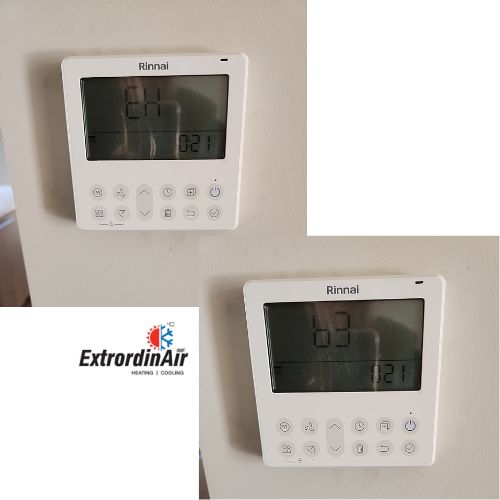
Most Rinnai ducted air conditioning fault codes are specific to each model. Use our link at the top of this page to find your user manual for your particular model. There is one universal code that comes up on the wired controller, which is EH63. It means there is a communication error between the wired controller and indoor unit.
Note whether the controller is blank, intermittent or powered. Do not remove it from the wall or access the indoor unit. Arrange service if the code persists.
Some Rinnai ducted systems also use the EH/EL/EC/PC family shown in the split and multi split lists above. On those systems, codes such as EL01, EH60, EC51 or PC30 retain that platform’s meanings.
However, do not assume this applies to a 20–24 kW R410A system, a superseded ducted model or a third-party zone controller. Match the indoor unit, outdoor unit and wall-controller model first.
Ducted air conditioning issues that can look like faults
Before booking a call-out, check whether the system is showing normal protective behaviour:
- Three-minute restart delay: the compressor may not restart immediately after shutdown or a power interruption. Waiting at least 3 minutes before restarting, or when switching from heating to cooling (or vice versa) is normal.
- Defrost during heating: the indoor fan can stop temporarily, and steam or mist may appear at the outdoor unit.
- Fan-only transition: the compressor can stop when the set temperature is reached or while the system prevents coil icing.
- Zone limits: shutting too many zones can cause the system to protect itself. Keep the minimum airflow and common zone specified by the installer.
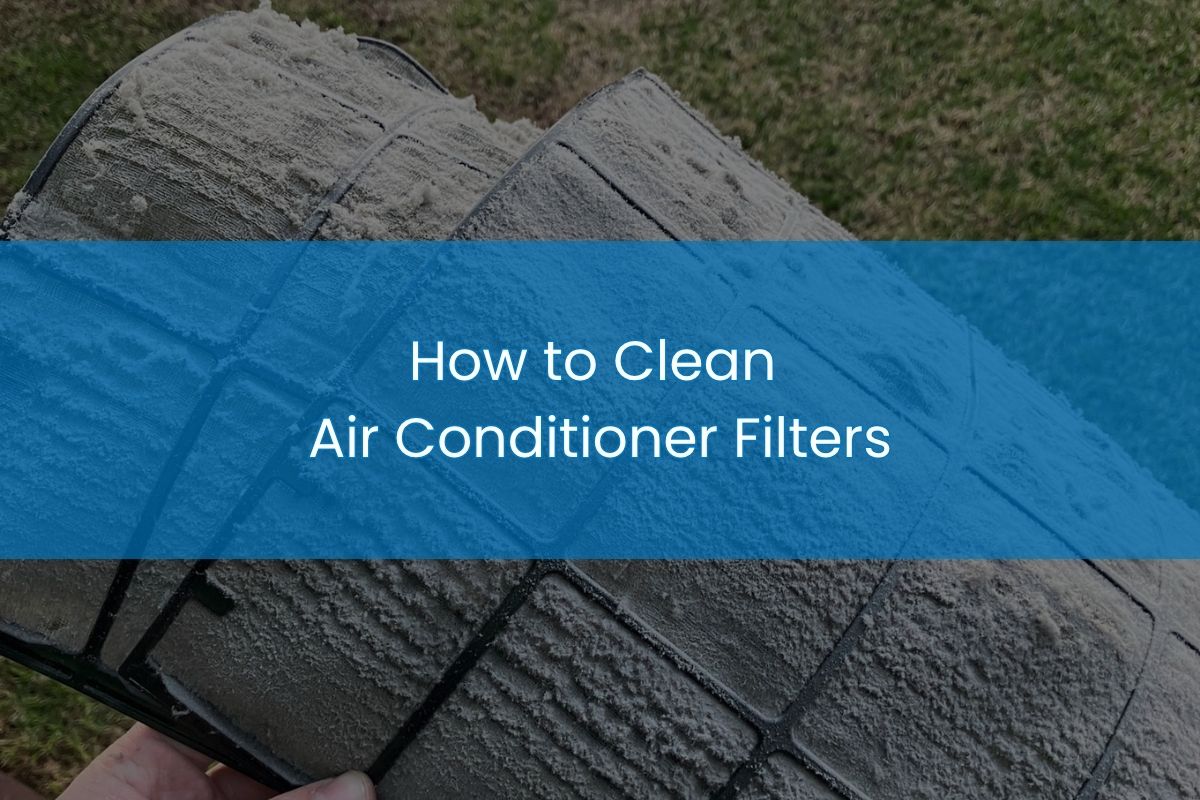
- Filter reminder: a filter-clean notification is maintenance advice, not necessarily a system fault. Reset it only after the filter has been serviced as instructed. We have instructions on how to clean your air conditioning filters here.
If a ducted controller displays a code not listed here or in your user manual, please reach out to Rinnai, or the team at ExtrordinAir for assistance. That is safer and faster than choosing a meaning from a generic internet list.
Rinnai Mini VRF fault codes
Rinnai Mini VRF has a distinct diagnostic system, so its codes should remain separate from split and ducted codes. A controller may first show an indoor-unit fault that points to a second code at the outdoor unit. On a multi-indoor system, note the address and affected indoor unit as well as the code.
Mini VRF indoor-unit and controller codes
| Code | What to do |
|---|---|
| A01 means emergency stop. | Leave the system off and determine whether an emergency switch, fire system or central controller has stopped it. Do not restart it until the reason is known. |
| A11 means a R32 refrigerant leak detected, where an R32 leak-detection configuration is fitted; the system shuts down. | Leave the system off, ventilate the area, avoid flames or ignition sources and arrange urgent service by a licensed refrigerant technician. |
| A51 is an outdoor unit fault; inspect the outdoor display for the underlying code. | Check the display on the outdoor unit, if it can be viewed safely, and record its code. A technician will need the outdoor code to identify the underlying fault. |
| A71 / A73 is an interlocked heat-recovery ventilation unit fault in series / non-series configuration. | Arrange service for the connected heat-recovery ventilation equipment and its communication circuit. |
| A72 is a humidity unit fault. | The humidity-control equipment needs professional inspection. |
| A74 is an AHU kit slave fault. | Arrange service. The AHU interface, addressing or connected equipment may require testing. |
| A81 is a self-check fault. | Allow any commissioning test to finish. If the code remains, arrange technician diagnosis. |
| A82 is a refrigerant flow-direction switching-device fault. | Leave the affected system off and book service. The valve, actuator or control circuit requires testing. |
| A91 is an operating-mode conflict. | Check whether connected indoor units are requesting incompatible modes. Set them to the same compatible mode or follow the building’s central-control settings. |
| b11 / b13 is an electronic expansion valve No. 1 / No. 2 coil fault. b12 / b14 is an electronic expansion valve No. 1 / No. 2 body fault. | Arrange service. These codes concern the expansion-valve coils or valve bodies and are not user-serviceable. |
| b34 / b35 is a water-pump No. 1 / No. 2 protection. | Turn the affected indoor unit off and check for visible water. Arrange prompt service for the drain and pump system. |
| b36 is a water-level switch alarm. | Turn the affected unit off immediately, particularly if water is dripping or appearing at a safety drain. The drain, pump or float switch needs inspection. |
| b71 / b72 is a reheating / pre-processing electric-heater fault. | Leave the affected heating function off and arrange electrical diagnosis. |
| b81 is a humidifier fault. | Stop using the humidification function and arrange service. |
| C11 means duplicate indoor-unit address. | This is a commissioning or addressing problem. A VRF technician must identify and correct the duplicate address. |
| C21 is an indoor/outdoor communication fault. | Check whether an indoor or outdoor unit has been deliberately isolated. If not, arrange service to test power, communication wiring and control boards. |
| C41 is a communication fault between indoor main board and fan-drive board. | Turn the affected unit off and arrange service. |
| C51 is a communication fault between indoor unit and wired controller. | Record whether the controller is blank, intermittent or showing other codes, then arrange service. Do not remove the controller from the wall. |
| C52 is a communication fault between indoor unit and Wi-Fi kit. | Check that the router and Wi-Fi equipment are operating. If normal controller operation is also affected or the code remains, arrange service. |
| C61 is a communication fault between indoor main board and display board. | Arrange service. The display, internal wiring or control board requires testing. |
C71 is a communication fault between AHU slave and master.
C72 is an AHU kit quantity mismatch
C73 is a communication fault between a linked humidifying indoor unit and master unit
C74 / C75 is a communication fault between linked fresh-air processing unit and master unit, in series / non-series configuration
C76 is a communication fault between main and secondary wired controllers
C77 / C78 is a communication fault between indoor board and expansion board No. 1 / No. 2
C79 is a communication fault between indoor board and switch board
C71-79 are communication or configuration faults involving AHU fresh-air, humidification, expansion or controller equipment. Record the exact code and arrange specialist VRF service. These faults involve linked components, addressing or internal communication wiring.
| Code | What to do |
|---|---|
| C81 is an indoor unit power-off fault. | Check whether that indoor unit’s power has been deliberately isolated. If a breaker has tripped, do not repeatedly reset it; arrange electrical diagnosis. |
| d16 is an inlet temperature too low during heating. | Check whether doors, windows or fresh-air dampers are allowing unusually cold air into the system. If conditions are normal or the code returns, arrange service. |
| d17 is an inlet temperature too high during cooling. | Reduce unusual heat entering the conditioned area and check for obstructed return airflow. Persistent codes need professional diagnosis. |
| d81 is a temperature or humidity outside the permitted range fault. | Allow indoor conditions to return to the system’s normal operating range. Arrange service if the code appears under ordinary conditions. |
dE1 is a sensor control-board fault. Arrange a service.
dE2 is a PM2.5 sensor fault
dE3 is a CO2 sensor fault
dE4 is a Formaldehyde sensor fault
dE5 is a human-detection sensor fault
dE2, dE3, dE4 or dE5 are all indoor air-quality or occupancy sensor faults: Cooling and heating may continue without the affected feature. Arrange service if the code remains or air-quality controls are required.
E21 is a fresh-air inlet temperature sensor T0 open or short circuit.
E22 / E23 is upper / lower dry-bulb temperature sensor open or short circuit.
E24 is an indoor return-air temperature sensor T1 open or short circuit.
E21 to E24 are all fresh-air, dry-bulb or return-air temperature sensor faults: Arrange service to test the specified sensor and its wiring.
E31 is a wired-controller room-temperature sensor fault.
E32 is a wireless temperature-sensor fault.
E33 is an external room-temperature sensor fault.
E31, E32 or E33 are all controller, wireless or external room-temperature sensor faults. Check whether a wireless sensor needs batteries, where applicable. Otherwise, arrange service.
E61 / E62 is a pre-cooled / pre-heated fresh-air temperature sensor fault.
E81 is an outlet-air temperature sensor TA fault.
Arrange service. These sensors are within the controlled air-handling system.
EA1 / EA2 is an outlet / return-air humidity sensor fault.
EA3 / EA4 is an upper / lower wet-bulb sensor fault.
Arrange service if humidity or fresh-air control is affected.
EC1 is an R32 refrigerant leak-sensor fault, where fitted.
Leave the affected system off and arrange prompt service. The leak-detection safety system may not be operating reliably.
F01 is a heat-exchanger inlet temperature sensor T2A fault.
F11 is a heat-exchanger middle temperature sensor T2 fault.
F21 is a heat-exchanger outlet temperature sensor T2B fault.
Arrange service to test the sensor and wiring.
| Code | What to do |
|---|---|
| F12 is a T2 over-temperature protection. | Turn the affected unit off and check that filters, return grilles and supply outlets are not blocked. If the code returns, book service. |
| P31 is a fan-drive board input over-current protection. | Leave the affected unit off and arrange electrical and fan-motor diagnosis. |
| P34 means P31 occurred at least six times within 60 minutes. | This means the fan protection has operated several times. Do not restart the unit; arrange service. |
| P52 means the supply voltage is too low. | If there has been a local power problem, wait until the supply is stable. If the code returns, arrange electrical and VRF system checks. |
| P71 / P72 is a main-control / display-control EEPROM fault. | Arrange service. The board settings, programming or hardware may require attention. |
| U01 is an electronic lock active. | Check the central controller or speak with the building manager. This may be a control restriction rather than an equipment failure. |
U11 is a unit model code not set error
U12 is a capacity/horsepower code not set error
U14 is a capacity/horsepower setting error
U15 is a AHU fan-control input or DIP-switch setting error
U11-U15 above are commissioning settings. A VRF technician must confirm the equipment selections and control-board settings.
U38 is an address not detected error.
Arrange service to check addressing, communication wiring and commissioning settings.
J01 means the fan motor has failed repeatedly.
J1E means the fan module/IPM over-current
J11 means instantaneous phase-current over-current
J3E / J31 means DC bus voltage too low / too high
J43 means phase-current sampling bias fault
J45 is a motor and indoor-unit mismatch
J47 is an IPM and indoor-unit mismatch
J5E is a motor start fault
J52 is a motor blocked
J55 is a speed-control mode setting error
J6E is a motor phase-loss fault
All J codes are fan motor, drive module or electrical fault codes. Leave the affected indoor unit off and arrange service. Do not attempt to turn or access the fan manually.
The b36 water-level alarm, A11 refrigerant-leak shutdown and recurring electrical protection codes should be treated promptly. A licensed technician may need to inspect the condensate system, leak-detection circuit, refrigerant circuit or electrical supply.
Mini VRF outdoor-unit codes
| Code | What to do |
|---|---|
| HF means the incorrect type of indoor unit is connected | This is an equipment compatibility or commissioning issue. Arrange specialist VRF service from our team at ExtrordinAir. |
| H0 is a communication fault between the main control and motor-drive modules. | Leave the system off and arrange service. |
| H4 means that L0 or L1 has occurred three times within one hour. | Do not continue resetting the system. A technician must diagnose the repeated L0 or L1 events. |
| H7 means the number of detected indoor units has changed from the configured number. | Check whether any indoor units have been deliberately isolated. Otherwise, arrange service to inspect power, addressing and communication wiring. |
| E2 is a communication fault between indoor and outdoor units. | Check whether any unit has been switched off or isolated. If all units should have power, arrange service. |
| E3 means a T6A or T6B temperature-sensor fault. | Arrange service to test the specified sensor and wiring. |
| E4 means the T3 condenser or T4 outdoor ambient temperature-sensor has a fault. | Turn the system off. If the problem follows a supply interruption, wait until power is stable before one restart. Recurring faults need electrical testing. |
| E5 is an input-voltage fault. | Turn the system off. If the problem follows a supply interruption, wait until power is stable before one restart. Recurring faults need electrical testing. |
| E6 is a DC fan fault. | Turn the system off and check only for obvious debris around the fan guard. Do not remove the guard or touch the fan. |
| Eb means E6 (DC fan fault) has occurred more than six times in one hour. | Leave the system off and book service. The fan protection has operated multiple times. |
| E9 is a compressor parameter mismatch; shown as E.9. on some displays. | Arrange specialist diagnosis. Compressor or inverter settings may be incorrect. |
| EF is a power-factor-correction fault. | Leave the system off and arrange electrical service. |
| EH is a refrigerant-radiator temperature-sensor fault. | PL is a refrigerant-radiator surface-temperature fault. Arrange service. Do not access the outdoor electrical compartment. |
| P1 is a high-pressure protection fault. | Turn the system off and check for obvious airflow obstructions around the outdoor unit. If the area is clear, leave it off and book service. |
| P2 is a low-pressure protection fault. | Leave the system off and arrange a licensed refrigerant technician. Possible causes include a leak, restriction or pressure-control fault. |
| P3 is an over-current protection fault. | Turn the system off and arrange electrical and compressor diagnosis. |
| P4 is a compressor discharge-temperature T5 protection fault. | Leave the system off and book service. Repeated operation could place further stress on the compressor. |
| P5 is a condenser-temperature T3 protection fault . | Check that the outdoor unit has clear airflow. If the code remains or returns, arrange service. |
| P8 is a strong-wind/typhoon protection code. | Wait for severe wind conditions to pass and allow the system to recover. If the code appears in calm weather, arrange service. |
| P9 is a reversing-valve changeover fault. | Arrange service. The valve, control circuit and refrigerant operation require testing. |
| PE is an indoor evaporator-temperature T2 protection code. | Check filters, return-air grilles and supply outlets for restrictions. Persistent codes require professional diagnosis. |
| L0 is a compressor IPM module protection code. | Leave the system off and arrange service. |
| L1 is a DC bus low-voltage protection code . | Wait for the electrical supply to stabilise after any local outage. If the code returns, arrange electrical testing. |
| L2 is a DC bus high-voltage protection code. | Turn the system off and arrange service. |
| L4 is a software over-current protection code | Leave the system off and arrange compressor and inverter diagnosis. |
| L5 is a compressor zero-speed protection code. | Book service. The compressor has not operated as commanded. |
| L7 is a compressor phase-sequence error code. | Leave the system off and arrange professional electrical diagnosis. |
L8 is a compressor speed changed by more than 15 Hz within one second code
L9 means the difference between requested and actual compressor speed exceeds 15 Hz
Stop repeated restart attempts and arrange service for both L8 and L9 codes.
F1 means the DC bus remained below 200 V DC for five seconds after compressor start-up
Arrange electrical and inverter diagnosis.
PF means the outdoor unit is locked.
Contact the installer or service technician. This may be a commissioning, protection or service-control lock.
PH is a refrigerant-radiator sensor or low-temperature protection code .
The system may recover when outdoor conditions improve. If the code remains in normal conditions, arrange service.
Most outdoor Mini VRF codes are technician-level diagnostics. The code identifies the protection circuit that stopped the system; it does not, by itself, prove which part should be replaced. Refrigerant pressures, temperatures, electrical readings, addressing and service history must be tested before a repair decision is made.
Rinnai Mini VRF fault codes
Rinnai Mini VRF has a distinct diagnostic system, so its codes should remain separate from split and ducted codes. A controller may first show an indoor-unit fault that points to a second code at the outdoor unit. On a multi-indoor system, note the address and affected indoor unit as well as the code.
Mini VRF indoor-unit and controller codes
Mini VRF status codes that are not necessarily faults
The Mini VRF indoor display can also show operating states:
| Code | What to do |
|---|---|
| d0 means oil return or preheating. | Allow the cycle to finish. Arrange service only if the system remains in this state for an unusually long time or does not resume normal operation. |
| dC is a self-clean operation. | Allow self-cleaning to finish before restarting or changing modes. |
| dd is an operating-mode conflict. | Set the affected indoor units to compatible modes or follow the central controller’s operating mode. |
| dF is defrost operation code. dF during heating is normally a defrost cycle rather than a breakdown. | Give the system time to finish. The indoor fan may stop and steam may appear outside. Book service if heating does not resume. |
| d51 is a static-pressure detection code. | Allow the test to finish. If the code remains, contact the installer. |
| d61 is a remote shutdown code. | Check timers, the central controller, building-management system or authorised shutdown controls. |
d71 is an indoor-unit backup operation code.
d72 is an outdoor-unit backup operation code.
The system may still run using redundancy, but a fault may have caused another unit or component to be taken offline. Arrange service soon for d71 and d72 codes.
OTA means a program update is in progress.
Do not disconnect the power while the update is running. Arrange support if the update does not finish.
Mini VRF status codes that are not necessarily faults
The Mini VRF indoor display can also show operating states:
Code: d0 means oil return or preheating.
What to do: Allow the cycle to finish. Arrange service only if the system remains in this state for an unusually long time or does not resume normal operation.
Code: dC is a self-clean operation.
What to do: Allow self-cleaning to finish before restarting or changing modes.
Code: dd is an operating-mode conflict.
What to do: Set the affected indoor units to compatible modes or follow the central controller’s operating mode.
Code: dF is defrost operation code. dF during heating is normally a defrost cycle rather than a breakdown.
What to do: Give the system time to finish. The indoor fan may stop and steam may appear outside. Book service if heating does not resume.
Code: d51 is a static-pressure detection code.
What to do: Allow the test to finish. If the code remains, contact the installer.
Code: d61 is a remote shutdown code.
What to do: Check timers, the central controller, building-management system or authorised shutdown controls.
Code: d71 is an indoor-unit backup operation code.
What to do: The system may still run using redundancy, but a fault may have caused another unit or component to be taken offline. Arrange service soon for d71 and d72 codes.
Code: d72 is an outdoor-unit backup operation code.
What to do: The system may still run using redundancy, but a fault may have caused another unit or component to be taken offline. Arrange service soon for d71 and d72 codes.
Code: OTA means a program update is in progress.
What to do: Do not disconnect the power while the update is running. Arrange support if the update does not finish.