How Air Conditioning Improves Melbourne Air Quality
Most people think of their air conditioner as a way to stay cool in summer and warm in winter. But your reverse cycle system is doing something else every time it runs: filtering the air inside your home.
A split system or ducted reverse cycle air conditioner works by drawing air in from the room, passing it through a filter and over the indoor coil, and pushing it back out. It doesn’t bring in outdoor air, rather recycles and filters what’s already inside. That means every time you run your air conditioning, it’s removing a portion of the dust, pollen, fine particles, and other airborne pollutants circulating through your home. With the house closed up, your air conditioner creates a sealed, filtered environment that significantly reduces your family’s exposure to whatever is happening in the air outside.
In a city like Melbourne, where the outdoor air quality shifts dramatically from season to season, that matters more than most people realise.
Table of Contents
- Why indoor air quality matters in Melbourne’s inner suburbs
- Filtering bushfire smoke: why your AC type matters
- Keeping pollen outside during Melbourne’s hay fever season
- Cleaner heating: how reverse cycle compares to gas and wood
- Construction dust: keeping your filters working in Melbourne’s busiest suburbs
- Traffic pollution, industrial emissions, and what your AC can’t fix (but can manage)
- Getting the most from your air conditioner for better indoor air
- Breathe easier at home
Why indoor air quality matters in Melbourne’s inner suburbs
Melbourne’s air quality is generally good by global standards. The city’s annual average fine particulate matter (PM2.5) levels meet both Australian and World Health Organisation limits, and most days the Air Quality Index across the inner suburbs reads “Good.”

But that average hides a lot of seasonal variation. If you live in Melbourne’s inner north, north-west, or inner west (across the local government areas of Merri-bek, Moonee Valley, Darebin, Yarra, Melbourne City, and Maribyrnong) your home sits in a zone where multiple pollution sources overlap. There’s bushfire smoke in summer, some of the highest grass pollen levels in the world through spring, fine particle pollution from wood heaters in winter, traffic emissions from major freeways, construction dust from one of the biggest building booms in the city’s history, and (in the inner west) industrial and port-related pollution that has been a persistent issue for decades.
Your air conditioner can’t fix Melbourne’s outdoor air quality. But it can control what your family breathes inside your home. Here’s how air conditioning improves Melbourne air quality season by season.
Filtering bushfire smoke: why your AC type matters
When bushfire smoke drifts across Melbourne, the most important thing you can do at home is close up the house and let your air conditioning do its job. Your reverse cycle system filters indoor air continuously. Every cycle through the unit captures more fine particles and reduces the concentration of smoke inside your home.
This is one area where the type of system you have makes a real difference. Evaporative air conditioners work by drawing outdoor air in through wet pads and pushing it through the home. When the outdoor air is full of bushfire smoke, that means your cooler is actively pulling smoke particles indoors. Emergency Victoria advises against using evaporative cooling during bushfire smoke events for exactly this reason. A reverse cycle system, by contrast, keeps the house sealed and filters what’s inside.
This isn’t a rare scenario for Melbourne. In January 2026, smoke from fires in the Otway Ranges pushed Melbourne’s air quality to the sixth worst in the world for a period that day, with EPA Victoria recording “very poor” and “extremely poor” conditions across the inner west and north-west. During the 2019–20 Black Summer fires, Melbourne’s PM2.5 spiked to almost ten times the safe 24-hour exposure limit, and Ambulance Victoria reported a 66% spike in call-outs for breathing difficulties.
Suburbs across the Moonee Valley corridor, including Essendon, Airport West, Strathmore, Moonee Ponds, along with inner northern suburbs like Pascoe Vale, Brunswick, Coburg, and Preston, and the inner west including Maribyrnong, Braybrook, and Footscray, are all regularly affected when smoke drifts in from fires to the north, west, or south-west.
If you have evaporative cooling and you’re in a suburb that gets hit by smoke events, this is one of the strongest practical reasons to consider upgrading to a reverse cycle system.
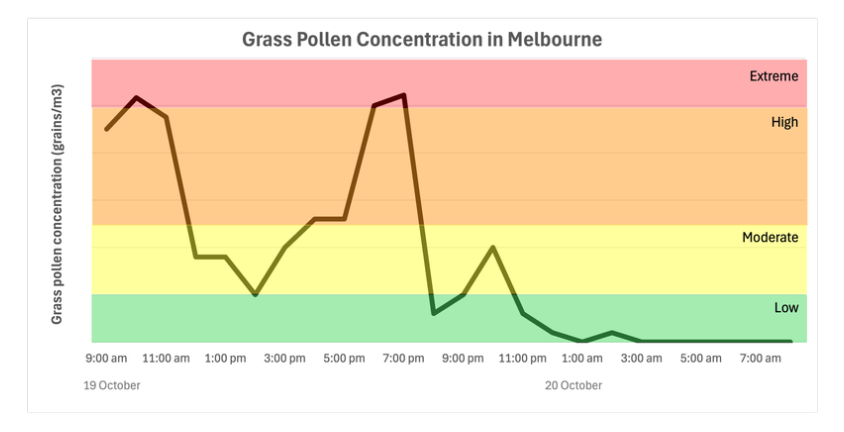
Screenshot from melbournepollen.com.au
Keeping pollen outside during Melbourne’s hay fever season
Melbourne’s grass pollen season runs from October through December, and for anyone with hay fever or asthma, it’s a miserable few months if pollen gets inside the home. A refrigerated air conditioning system running with windows and doors closed is one of the simplest and most effective ways to reduce indoor pollen levels. The system’s filter captures airborne pollen each time air passes through the unit. Because no outdoor air is being drawn in, the concentration inside drops steadily while the system runs.
Many modern split systems include enhanced filtration designed to capture smaller particles, including pollen and other common allergens. Some brands offer ionisation or electrostatic filter technology that improves capture rates for finer particles. Brands such as Panasonic, Mitsubishi and Daikin offer air purification built into their air conditioners for outstanding allergen control.
Even a standard clean filter makes a noticeable difference during high-pollen days — the key is making sure it’s clean before pollen season starts.
Where you live in Melbourne affects your pollen exposure. Suburbs along creek corridors tend to sit in natural pollen channels. The Darebin Creek corridor runs through Preston, Thornbury, and Alphington. The Merri Creek corridor passes through Brunswick, Coburg, Northcote, and Fitzroy North. Moonee Ponds Creek runs from Strathmore and Moonee Ponds through Essendon, Ascot Vale, and down to Kensington and Parkville. Suburbs further north-west, such as Keilor East, Airport West, Gladstone Park, Tullamarine sit closer to the open grassland plains of Victoria’s west, where pollen production is highest.
Melbourne also has a documented history of thunderstorm asthma — sudden, widespread asthma episodes triggered by the combination of high pollen counts and a certain type of thunderstorm. The Victorian Department of Health issues risk forecasts from 1 October to 31 December each year. The most severe event on record, on 21 November 2016, saw more than 3,400 people need emergency medical treatment and ten people lost their lives. Being indoors with the house sealed and your air conditioner running is one of the recommended protective measures during these events.
Cleaner heating: how reverse cycle compares to gas and wood
Melbourne is a gas heating city. Around 46% of Victorian households use ducted gas central heating, and a further 20% use gas room heaters. Across the inner north and north-west, ducted gas is the dominant system in homes built from the 1960s onward, and it’s still common even in renovated older homes.
Gas ducted heating warms the home effectively, but it doesn’t filter the air the way a reverse cycle system does. A ducted gas heater draws air from the room through the return air grille, heats it in the gas combustion chamber, and pushes it back through the ducts. There’s typically a filter at the return air grille, but it’s designed primarily to protect the heater from large debris rather than to capture fine particles. Flued gas systems vent combustion byproducts outside, which is important, but they don’t actively improve the quality of the air circulating through the home.
A reverse cycle installation, on the other hand, filters the air every time it cycles. The indoor unit pulls air through a filter that captures dust, pollen, pet dander, and a portion of fine particles before conditioning it and pushing it back into the room. Over the course of a winter evening, the air inside your home gets progressively cleaner. That’s a meaningful difference for families with allergies, asthma, or young children.
The neighbourhood wood heater issue
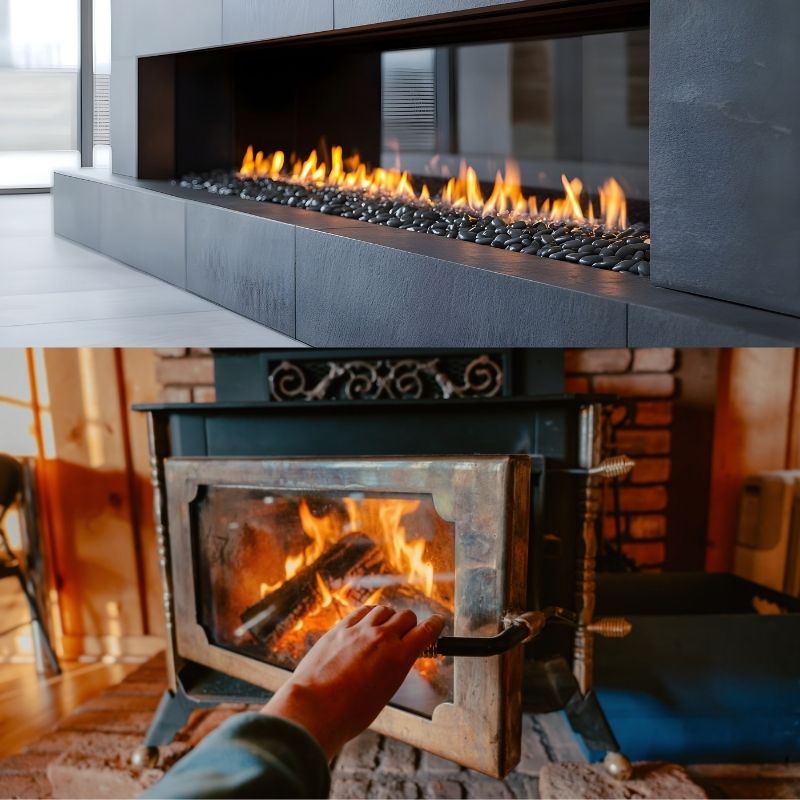
While most Melbourne homes heat with gas, the minority that still burn wood have a disproportionate impact on the air everyone breathes. According to EPA Victoria’s emissions inventory, wood heating accounts for 51% of all PM2.5 emissions across Melbourne — more than all vehicle emissions combined. A single new wood heater, operated under Australian standards, produces more PM2.5 in its first hour after lighting than a petrol car emits in an entire year of driving.
In suburbs where some homes still have wood heaters alongside neighbours with gas or reverse cycle heating and cooling installed, smoke from one fireplace can drift into surrounding properties and settle at ground level on cold, still evenings. Older homes with gaps around doors, windows, and floorboards are especially vulnerable to infiltration.
Air conditioning produces zero combustion emissions. It’s a cleaner option for your household and for your neighbourhood. And when your neighbour’s wood heater smoke is drifting through the street, your air conditioner is filtering the air inside your home with every cycle, helping to reduce the amount of smoke your family is exposed to indoors.
Construction dust: keeping your filters working in Melbourne’s busiest suburbs
Melbourne’s inner north and west are in the middle of a sustained building boom. Older homes are being renovated, knocked down, and replaced with townhouses and apartments across every local government area that ExtrordinAir services. Demolitions, excavations, concrete cutting, and earthworks generate coarse and fine dust that settles on nearby properties and finds its way inside.
Your air conditioner’s filter is your first line of defence during construction periods. But here’s the catch: construction dust clogs filters faster than normal conditions. If you live near an active building site, we encourage you to check and clean your filters more frequently to maintain both airflow and filtration performance. A clogged filter restricts airflow and forces your air conditioner to work harder. Ultimately, this can increase your running costs, and shorten the life of your system.
The construction activity varies by area, but it’s intense across the board:
- Merri-bek: The Sydney Road corridor through Brunswick and Coburg is one of Melbourne’s most active development strips, with apartment projects, townhouse builds, and commercial conversions generating near-constant dust. Pascoe Vale and Glenroy are seeing similar infill activity as blocks are subdivided and rebuilt.
- Darebin: Preston has dozens of active developments along High Street, Plenty Road, and Bell Street, including the Preston Crossing precinct and apartment projects from Gower Street to Dundas Street. Thornbury and Northcote are experiencing steady townhouse development.
- Moonee Valley: Essendon Fields continues to develop as a mixed-use precinct. Across Moonee Ponds, Essendon, and Strathmore, character homes are being replaced or extended. In Airport West and Keilor East, homes from the 1970s and 1980s are increasingly being knocked down and rebuilt.
- Yarra: Dense inner-urban areas like Fitzroy, Collingwood, and Carlton North have apartment and commercial developments along Smith Street, Brunswick Street, and Nicholson Street, often immediately next to existing terrace homes.
- Melbourne City: Carlton’s Lygon Street precinct, the expanding Parkville university campus, and the Arden urban renewal precinct in North Melbourne are all ongoing sources of construction activity. Kensington is seeing residential intensification on former industrial sites.
- Maribyrnong: Former industrial sites across Maribyrnong and Braybrook are being redeveloped into residential precincts, adding construction dust to an area that already faces air quality challenges.
For homes with ducted air conditioning, scheduling a professional air conditioner service as well as duct cleaning after major nearby construction finishes is a smart investment. Dust that accumulates inside ductwork continues to circulate through the home long after the building site has quietened down.
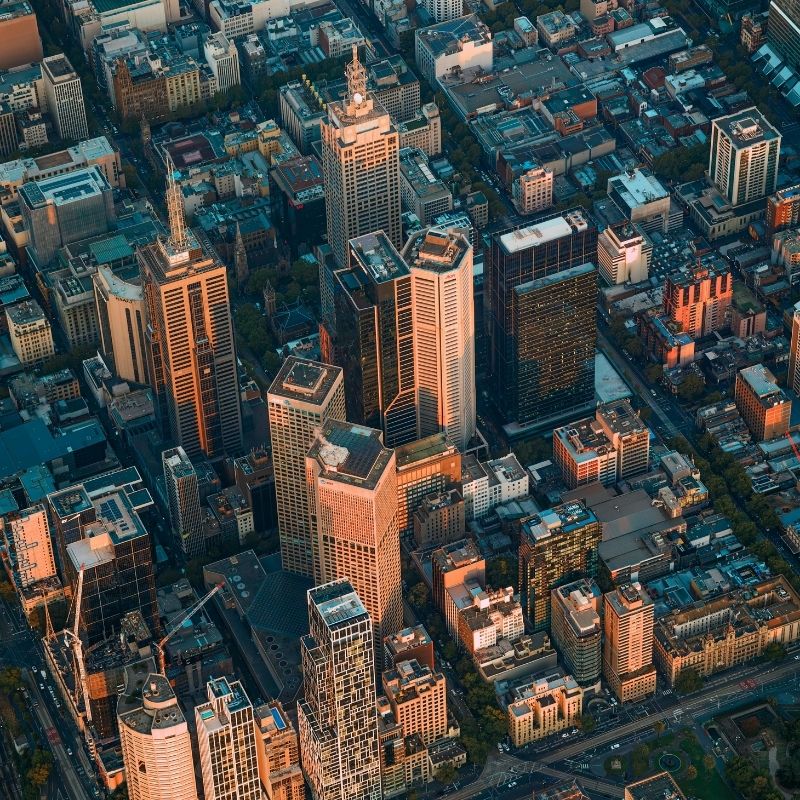
Traffic pollution, industrial emissions, and what your AC can’t fix (but can manage)
Some air quality challenges in Melbourne’s inner suburbs are seasonal. Others are constant. Homes near major freeways, arterial roads, and industrial zones are exposed to higher baseline levels of nitrogen dioxide and fine particulate matter from vehicle exhaust and industrial activity year-round.
The Tullamarine Freeway carries up to 210,000 vehicles per day through the Moonee Valley area, running past Airport West, along the boundary of Essendon Airport, through Strathmore, and south into the Moonee Ponds Creek reserve toward Parkville. Bell Street, a major east–west arterial, cuts through Pascoe Vale South, Coburg, and Preston. Sydney Road through Brunswick and Coburg, Plenty Road through Preston, and Pascoe Vale Road connecting the northern suburbs to the freeway all carry heavy daily traffic.
In the inner west, the picture is different but no less significant. The Maribyrnong local government area contains 18% of Melbourne’s industrially-zoned land. Truck traffic from the Port of Melbourne routes through Maribyrnong, Braybrook, and Footscray daily. An EPA Victoria study of PM2.5 sources across the inner west, conducted between 2021 and 2022, confirmed motor vehicle exhaust, industrial activity, and wood combustion as the primary contributors to fine particle pollution in the area. Maribyrnong City Council’s asthma rates are among the highest in Victoria, and the council has formally advocated for stronger government action on air quality.
Suburbs near Melbourne Airport like Tullamarine, Gladstone Park, Airport West, and Keilor Park, have additional exposure from airport operations, logistics zones, and the freight vehicles that service them.
Your air conditioner won’t eliminate traffic or industrial pollution from your suburb. But it does create a meaningful buffer between the outdoor air and what your family breathes indoors. With the house closed and your air conditioning system running, every pass through the filter reduces the concentration of fine particles inside. For homes along busy roads or near industrial areas, keeping windows closed during peak traffic hours and making sure your system’s filters are clean becomes especially important.
Getting the most from your air conditioner for better indoor air
Whether you have a single wall mounted split system installed, or a top of the line Panasonic ducted air conditioner with built in air purification, your air conditioner is already doing more for your indoor air quality than you might think. Here’s how to make sure it’s working at its best:
- Clean your filters regularly. This is the single most impactful thing you can do. A dirty filter restricts airflow, forces the system to work harder, increases running costs, and lets particles recirculate. Check your filters at least every three months, more often during bushfire season, pollen season, or when there’s construction activity nearby.
- Close up the house when outdoor air quality is poor. Your air conditioner can only protect your indoor air if the house is sealed. During smoke events, high-pollen days, or when you can smell wood heater smoke in the street, close windows and doors and let your system filter the air inside. The longer it runs in a sealed environment, the cleaner the indoor air becomes.
- Know the difference between reverse cycle and evaporative cooling. A reverse cycle air conditioner filters and recycles indoor air. An evaporative air conditioner draws outdoor air in – along with whatever is in it. During poor air quality events, evaporative cooling brings smoke, pollen, and dust directly into your home. If you’re still running evaporative cooling and your suburb is regularly affected by smoke or high pollen, upgrading to a reverse cycle system is one of the most practical improvements you can make.
- Seal gaps and draughts. Older homes across the inner north and west often have gaps around doors, windows, and floorboards that let unfiltered outdoor air in continuously. Draught sealing improves both air quality and energy efficiency.
- Book a pre-season service. Having your air conditioner professionally serviced before summer and winter means it’s running at peak performance when you need it most. A technician can clean the coil and internal components, check refrigerant levels, inspect ductwork, and ensure your filters are in good condition.
- Consider upgrading ageing systems. If your home still has an older ducted gas heater, a wall furnace, or a split system that’s well past its prime, a modern reverse cycle system delivers better energy efficiency, better filtration, and zero direct combustion emissions. For homes switching from gas to electric heating, Victorian Energy Upgrades (VEU) rebates may apply to eligible changeovers.