What is an Inverter Air Conditioner?
Energy conservation and cost efficiency are priorities when choosing an air conditioning system for your home or business. If you’ve been comparing air conditioners, you’ve probably encountered inverter models or wondered why some are relatively cheap while others appear more expensive.
It all lies in the technology used to heat and cool your space. In this post, we’ll explain what an inverter air conditioner is and how it compares to a non-inverter air conditioner so you can make an informed choice.
Table of Contents
- What Is an Inverter Air Conditioner and How Does it Work?
- Benefits of Inverter Air Conditioning
- What Is an Inverter Split System?
- Do All Ducted Air Conditioning Systems Use Inverters?
- Do Inverter Air Conditioners Cost More?
- Is Installing an Inverter Air Conditioner Worth It?
- FAQs
- Final Thoughts on Choosing an Inverter Air Conditioner
What Is an Inverter Air Conditioner and How Does it Work?
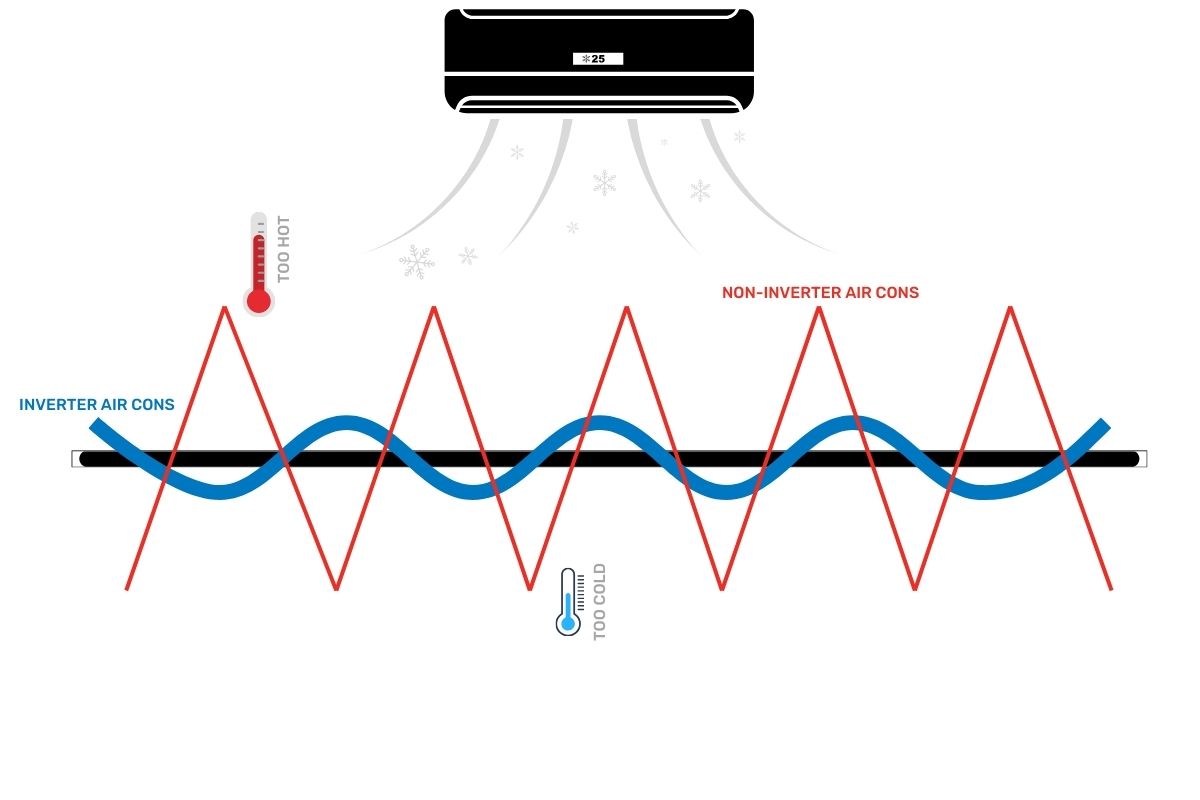
An inverter air conditioner uses technology to regulate the speed of the compressor motor. It looks just like a traditional air conditioner, but rather than the motor cycling on and off to maintain a set room temperature, modern inverter air cons continuously adjust the motor’s speed based on cooling or heating needs.
This allows the air conditioner to efficiently control the flow of refrigerant within the system, ensuring that the indoor temperature remains consistent without sharp fluctuations. This innovation improves overall energy efficiency and offers better comfort and performance.
The key to understanding how these air conditioners work lies in its variable-frequency drive (VFD), which adjusts the speed of the compressor to maintain the desired temperature.
Here’s how it works in simple terms:
- Start-Up Phase: When you power up the unit, the compressor motor operates at full speed to reach the room temperature set.
- Temperature Maintenance: Once the room temperature reaches the set level, the inverter system slows down the compressor to maintain that temperature consistently.
- Energy Efficiency: Instead of turning the compressor on and off like a fixed-speed air conditioner, the inverter ensures a steady operation, consuming less electricity and reducing wear and tear on the system.
Here’s a visual of how it works:
Benefits of Inverter Air Conditioning
- Reduced energy consumption by avoiding on-off cycles, making them more efficient to run.
- Stable temperature regulation by controlling the compressor motor, which in turn, controls the refrigerant flow within the system
- Quiet operation
- Less maintenance needed and longer anticipated lifespan with less wear and tear on the motor
What Is an Inverter Split System?
A wall mounted split system is one of the most popular wall air conditioning systems. It consists of two pieces:
- An indoor unit (mounted on the wall) that distributes cool air (or warm air, depending on the mode).
- An outdoor unit containing the compressor, which is equipped with inverter technology.
Split system air conditioners are a popular choice across Melbourne for bedrooms, apartments, and smaller living spaces. At ExtrordinAir, we are a premium Panasonic dealer. All Panasonic split system air conditioners we install use inverters.
Do All Ducted Air Conditioning Systems Use Inverters?
Not all ducted air conditioning systems use inverters. Many older or less expensive models still rely on non-inverter technology with fixed-speed compressors. These systems are generally less energy efficient and ineffective at maintaining consistent temperatures leading to hot spots across your home.
Most leading brands now offer inverter models as part of their ducted central air conditioning lineup, and all Panasonic ducted air conditioning models we install have inverter technology.
Do Inverter Air Conditioners Cost More?
While inverter air conditioners are more expensive upfront than traditional units, their lower energy costs provide long-term savings.
When deciding on air conditioning installation in Melbourne, consider the following:
- Seasonal Energy Efficiency Ratio (SEER) ratings.
- Operating costs and long-term energy savings.
- Brand Reputation
- How you plan to use your air conditioner (all day or short periods)
Most modern split system air conditioners use inverter technology. Only window-mount-style or portable air conditioners tend not to have inverters. They’re loud, cost more to run, and are not ideal for Melbourne’s climate.
Is Installing an Inverter Air Conditioner Worth It?
Yes, inverter air conditioners are an excellent choice for anyone looking to reduce their energy consumption, achieve consistent temperatures, and enjoy quieter operation. They are ideal for regions that experience seasonal fluctuations, like Melbourne!
One heating and cooling system offers many benefits, from running costs to maintenance. Also, if you want to take advantage of VEU rebates when upgrading your air conditioning unit, you’ll need to choose an energy efficient inverter model. If you have a non-ducted reverse cycle air conditioner that is outdated and inefficient to run, you can receive between $210 to $490 in rebates to upgrade to a system with inverter technology. Talk to our friendly team today for advice.
FAQs
How much energy can I save with an inverter air conditioner?
On average, you can save up to 30-50% on energy bills compared to non-inverter units.
How long does an inverter air conditioner last?
Due to reduced wear and tear, inverter air conditioners typically last longer than traditional systems, with an average lifespan of 10-15 years when properly maintained.
What is the best brand for inverter air conditioners?
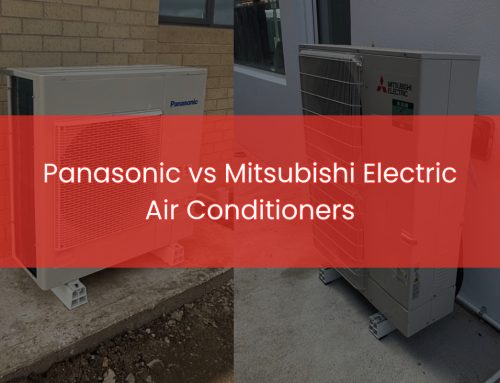
Top brands like Panasonic, LG, Daikin, and Mitsubishi are known for their reliability, energy efficiency, and smart features. We compared Panasonic vs Mitsubishi for running costs, and Panasonic was slightly more cost effective to run.
Are inverter systems good for heating as well as cooling?
Yes, reverse cycle inverter air conditioners offer both cooling and heating, making them highly versatile for year-round use. If you have gas heating and are looking to upgrade to electric, please get in touch.
Are inverter split systems expensive to install?
Installation costs are generally the same for both inverter and non-inverter air conditioners.
Do inverter air conditioners require specific maintenance?
Inverter air conditioners need regular maintenance, just like any air conditioner unit. This includes cleaning filters, inspecting refrigerant levels, and ensuring the compressor motor operates efficiently. While inverter systems typically undergo less wear and tear, professional servicing is recommended annually for peak performance.
Final Thoughts on Choosing an Inverter Air Conditioner
If you have an older, non-inverter air conditioning unit that regularly needs servicing, consider upgrading to a more modern inverter AC. With competitive prices and flexible interest-free payment plans available, our team at ExtrordinAir can help you invest in comfort, efficiency, and long-term savings. With advanced technology, these systems offer numerous advantages over traditional options in terms of performance, ease of operation, and environmental impact.
By opting for an inverter air conditioning, you’ll enjoy a reliable system, less energy consumption, and a comfortable indoor climate all year round.

20 Years
Experience

Professional
and Licensed

24 Hour
response time

Parts and labour
Guaranteed

Residential
& Commercial

Service
Melbourne Wide

No hidden
Cost

Clean Installation
Service
Client Reviews