Gas vs Electric Central Heating – Which is Best in 2026?
Whether building a new home or renovating an existing one, installing the right heating and cooling system is essential. Gas heating has been Melbourne’s primary choice for homes for many years, with over two million homes connected to the gas network. But with Victoria’s gas substitution roadmap and proposed electrification regulations currently under review, electricity is the preferred option for central heating and cooling, at least by the Victorian Government.
In this post, we’ll compare gas vs electric central heating so you can choose the right solution to heat your home sustainably while keeping costs in check.
Table of Contents
Gas Heating
A gas ducted heating system is powered by natural gas or liquefied petroleum gas (LPG) to generate and distribute heat throughout a property.
Common Gas Heating Methods:
- Ducted Gas Heating Systems: These systems distribute heated air through a network of ducts, providing a central heating solution that warms multiple rooms.
- Gas Wall Furnaces: Compact and mounted to walls, these gas heaters efficiently heat specific spaces, often used in single or double room installations in smaller homes.
- Hydronic Heating: This relies on gas to heat water, which is circulated through pipes, radiators, or in-floor systems to deliver consistent warmth. Please note, we do not offer hydronic heating at ExtrordinAir.

Advantages of Gas Heating
- Historically, natural gas has been more affordable than electricity, making ducted gas heating a cost-effective choice for larger homes.
- Fast Heating Performance: Gas systems produce a steady stream of high-temperature warm air, quickly warming up larger spaces.
- Add on cooling is available for selected gas ducted heaters (like Brivis Ice), so you can use the same ducts to cool your home in the warmer seasons.
Disadvantages of Gas Heating
- Environmental Concerns: Natural gas is a fossil fuel that contributes to greenhouse gas emissions, which have far-reaching implications for Melbourne’s and Australia’s climate change goals.
- Health Risks: Poorly maintained systems can emit toxic carbon monoxide and other pollutants like nitrogen oxides (NOx). Regular servicing is needed to ensure flue exhaust systems function safely.
- Upfront and Maintenance Costs: Ducted gas systems often require higher initial installation costs and occasional repairs to maintain efficiency.
- The Victorian Government is proposing all gas heating be switched to electric at the end of its life and aims to reduce emissions by 75-80% by 2035. Homeowners choosing gas for their new heating system in 2026 may see themselves transitioning to an electric one as early as 2035. With the proposed end of life regulations (see below), you may have no choice but to switch to electric heating in the near future.
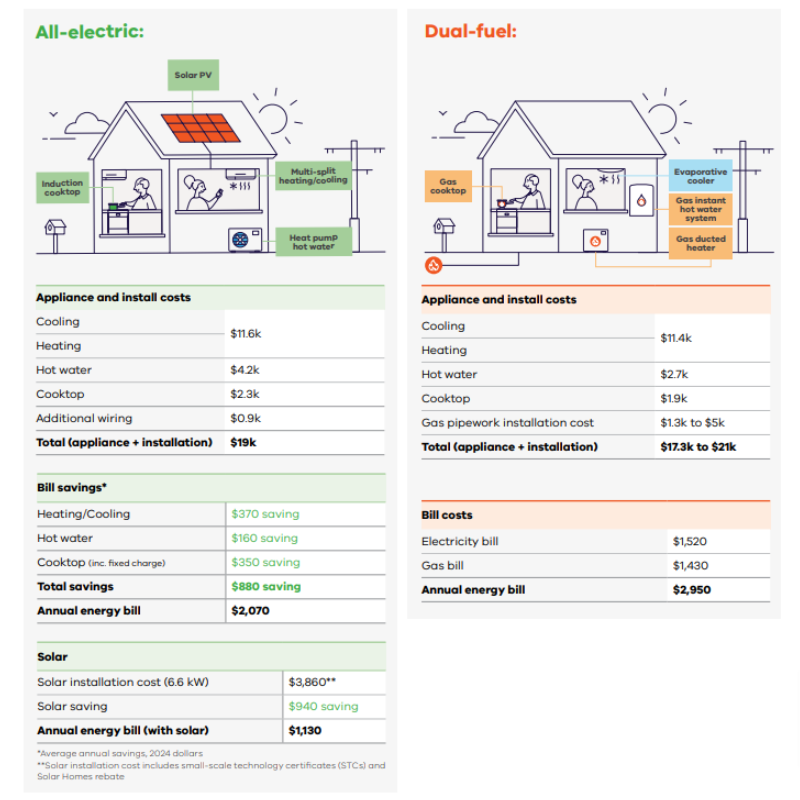
Image Source: https://www.energy.vic.gov.au/__data/assets/pdf_file/0035/668591/Gas-substitution-roadmap-new-homes-factsheet.pdf
Victoria Aiming to Transition to All Electric Appliances
Victoria has Australia’s highest gas usage for heating, cooking, and hot water, with over two million homes currently connected to the gas network.
The Victorian Government is taking significant steps towards the progressive electrification of homes and buildings as part of its commitment to achieving net zero emissions. Through its Gas Substitution Roadmap, the state government has already banned gas connections to new dwellings, apartments, and residential subdivisions requiring planning permits as of January 1, 2024.
Future plans include replacing gas appliances in existing residential buildings with efficient electric alternatives—such as heating, hot water, and cooling—once those appliances reach end-of-life. This aligns with Victoria’s goal of reducing its reliance on fossil gas.
Electric heating has several advantages in the Australian climate system:
- Potential for cleaner energy: As Australia’s electricity grid incorporates more renewable energy—like wind power and hydroelectricity—electric heating can reduce greenhouse gas emissions tied to fossil fuel usage.
- Highly efficient appliances: Modern air conditioning installations incorporate advanced heat pump technology, boasting a high coefficient of performance (COP). That means you can get multiple kilowatt-hours (kWh) of heat output for every 1 kWh of electricity consumed.
- Victoria’s retail electricity prices decreased by 7% in 2024 compared to 2023. The quarterly report by the Australian Energy Market Operators confirms that Victoria’s electricity prices are the lowest in Australia, and are projected to continue declining.
- Flexible installation: Electric systems can be easier in apartments, especially with limited gas connection or pipe infrastructure access. Reverse cycle air conditioners do not require a flue or ventilation to expel exhaust gas.
On the downside, electric heating can be expensive during peak demand periods when the cost of electricity is higher. Solar panels, feed-in tariffs, and other energy incentives in Victoria can offset running costs.
Electric heating technology has advanced significantly in recent years and offers more environmentally friendly, energy-efficient options for central heating. Ducted electric systems and split system reverse cycle air conditioners are popular choices for Melbourne homes and apartments as they align with Victoria’s electrification goals.
Common electric heater options:
- Ducted Electric Heating Systems: Like gas ducted systems, these distribute warm air through ducts, using electric heating elements or heat pumps to generate heat.
- Split System Reverse Cycle Air Conditioners: These systems offer heating and cooling, using an air-source heat pump to heat smaller homes or specific rooms while being highly efficient and cost-effective.
Advantages
- Environmentally Friendly: Electric heating powered by renewable energy sources like wind or hydroelectricity reduces carbon footprints.
- Energy Efficiency: Reverse cycle air conditioning systems can achieve up to 300% efficiency, producing far more energy as heat than is consumed during operation.
- Versatile Climate Control: Reverse cycle air conditioners provide seamless year-round heating and cooling solutions for Melbourne’s variable weather.
- The AEMC projects a 9% decrease in wholesale electricity prices in Victoria over the next decade (2026 data) driven by the state’s increasing renewable energy capacity and higher electrification rates.
- Rising electrification demand will likely place sustained downward pressure on household energy costs.
Disadvantages
- Slower Heating in Older Systems: While modern units are efficient, traditional electric resistance systems take longer to achieve desired temperatures than gas ducted heating units.
- Electricity pricing is higher during peak periods, which may affect running costs depending on your usage.
Gas vs Electric Heating Comparison
Best Heating Options for Melbourne Homes
Large Family Homes
Ducted gas heating systems can remain a cost-efficient choice for households with higher heating needs. Many new homes in Melbourne’s outer suburbs have been built with new gas ducted heating systems, however, this is being phased out with new regulations.
Modern ducted gas heaters like the Brivis StarPro 6 Series offer energy-efficient home heating solutions. Like electric heating, you can independently zone different areas of your home to heat only the rooms in use. It is also compatible with refrigerated cooling using the same ducts. The downside is the cost of a ducted gas heater with add-on cooling vs electricity.
For environmentally conscious families, ducted reverse cycle heating and cooling integrated with solar energy or batteries are a more sustainable option. And with wholesale electricity prices projected to decrease by 9% until the end of 2026, costs of running gas versus electric heating are similar.
Smaller Homes and Apartments
Split system reverse cycle air conditioners are highly recommended for apartments and smaller homes in Melbourne. These systems are compact, quick to install, and provide heating and cooling in one unit, delivering year-round comfort without complex ductwork. Multi-head split systems are increasingly popular for independent control across multiple rooms with only one outdoor unit. Learn more about multi-head split systems here, or read our blog post comparing multi head vs ducted aircon.
When comparing ducted gas heating with ducted electric heating systems, your choice ultimately depends on your priorities:
- If fast heating is key, ducted gas may suit your needs, especially if your property already has existing gas ducted heating and you want to upgrade your unit.
- If reducing your carbon footprint and planning for long-term sustainability is more important, ducted electric systems powered by renewables—or split system reverse cycle air conditioners for smaller spaces—are the way to go.
The decision to heat and cool your Melbourne home doesn’t need to be overwhelming, and guidance from our team at ExtrordinAir can help you pick the best heating and cooling solution. Whether it’s gas, electric systems, or a hybrid approach, an efficient and eco-conscious choice will keep you warm during Melbourne’s winters while aligning with your budget and sustainability goals.
Citations:
Muhammad Tawalbeh, Amani Al-Othman, Feras Kafiah, Emad Abdelsalam, Fares Almomani, Malek Alkasrawi, Environmental impacts of solar photovoltaic systems: A critical review of recent progress and future outlook, Science of The Total Environment, Volume 759, 2021, 143528, ISSN 0048-9697
https://doi.org/10.1016/j.scitotenv.2020.143528.
https://www.sciencedirect.com/science/article/pii/S0048969720370595

20 Years
Experience

Professional
and Licensed

24 Hour
response time

Parts and labour
Guaranteed

Residential
& Commercial

Service
Melbourne Wide

No hidden
Cost

Clean Installation
Service
Client Reviews