How to Choose the Right Air Conditioning System for Your Melbourne Home
Melbourne’s weather is famously unpredictable. You might wake up to a crisp 14-degree morning, swelter through a 38-degree afternoon, and reach for a blanket again by evening. This reality means choosing the right heating and cooling system isn’t just about comfort, it’s about finding a solution that handles everything Melbourne throws at it without blowing out your budget, or your energy bills.
Whether you’re upgrading an older air conditioning system, building a new home, renovating, or looking for the right setup for an investment property, this guide walks you through your options and helps you figure out which one makes the most sense for your situation.
Table of Contents
- Melbourne’s Climate Demands
- In 2026 and Beyond, These are the Best Air Conditioning Options for Melbourne Homes
- Choosing the Right System for Your Situation
- What to Consider When Choosing Air Conditioning for Your Home
- Choosing the Right Brand and Quality
- The Importance of Quality Installation
- What to Expect From the Installation Process
- Maintaining Your Investment
- Your Rights and Protections for Large Air Conditioning Installations in Melbourne
- Are You Ready to Find The Perfect Heating and Cooling System for Your Melbourne Home?
Melbourne’s Climate Demands
Melbourne sits in a temperate climate zone, but that label undersells the extremes we experience. Summer heatwaves regularly push past 40 degrees, while winter mornings can drop below 5 degrees. Add high humidity in late summer and you’ve got a climate that genuinely demands year-round climate control.
This is why many Melbourne homeowners end up with a combination of heating and cooling solutions, or opt for reverse cycle systems that handle both. The right choice depends on your home, your priorities, and how you actually live in your space.
In 2026 and Beyond, These are the Best Air Conditioning Options for Melbourne Homes

Reverse Cycle Air Conditioning
Reverse cycle air conditioners are the most popular choice across Melbourne, and for good reason. These systems work as both heaters and air conditioners, pumping heat into your home during winter and extracting it during summer. They run on electricity and are generally the most energy-efficient way to heat a home, producing around three units of heat for every one unit of electricity consumed.
Within the reverse cycle category, you’ve got three main configurations:
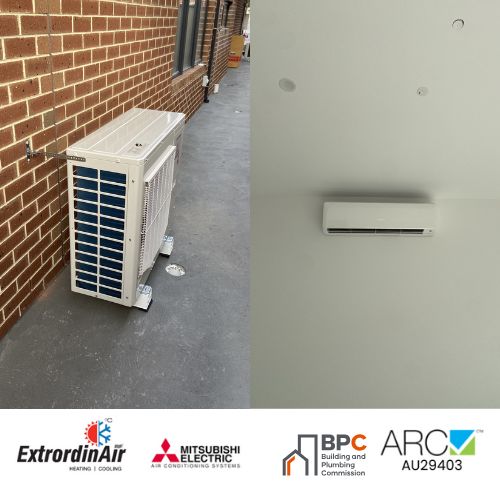
Wall-Mounted Split Systems
A split system consists of an indoor unit mounted on your wall and an outdoor compressor unit. They’re ideal for heating and cooling individual rooms or open-plan living areas up to around 60 square metres, depending on the model.
Installing split systems is the most affordable entry point into reverse cycle air conditioning, both in terms of upfront cost and installation. If you’re cooling a main living area, a bedroom, or a home office, a quality split system does the job brilliantly. Modern units are whisper-quiet, energy-efficient, and can be controlled via smartphone apps.
The trade-off? You need a separate unit for each space you want to climate control. For larger homes or homes with multiple rooms that need conditioning, this can mean multiple systems on your walls and multiple outdoor units around your property.
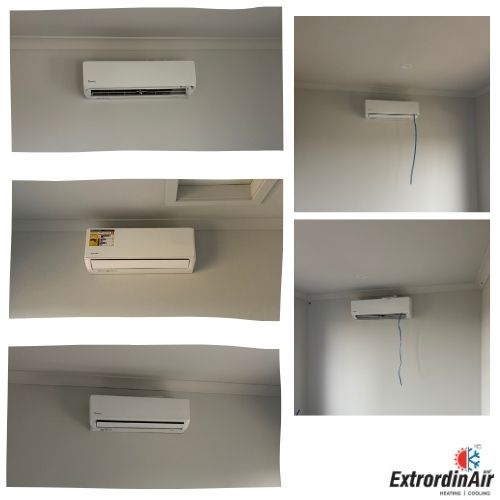
Multi-Head Split Systems
A multi-head split system solves the “outdoor unit sprawl” problem. These systems connect multiple indoor units (heads) to a single outdoor compressor. You can have anywhere from two to five indoor units running off one outdoor unit, allowing you to climate control multiple rooms without cluttering your external walls with compressors.
Multi-heads work well for homes where you want to control several specific rooms (like a living room, master bedroom, and a home office) without the expense of full ducted air conditioning. Each indoor unit can be controlled independently, so you’re only heating or cooling the rooms you’re actually using.
The main considerations here are that the outdoor unit needs to be sized correctly for the combined capacity of all indoor heads, and installation is more complex than a single split system. But for the right home, it’s an excellent middle-ground option.
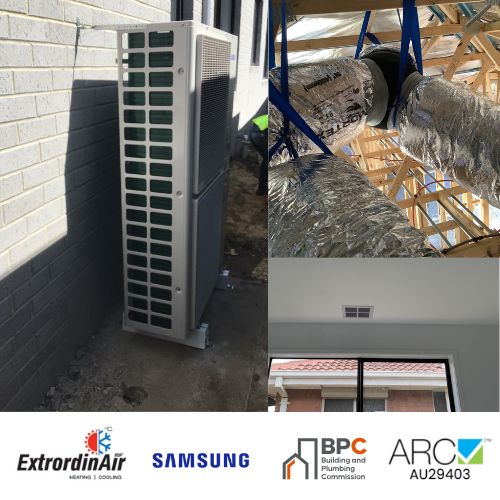
Ducted Air Conditioning
Ducted air conditioning is the whole-home solution. A single unit sits in your roof space with insulated ductwork running through your ceiling to vents in each room. You get discreet, seamless climate control throughout your entire home without any wall-mounted units visible in your living spaces.
Ducted systems include zoning capability, meaning you can divide your home into zones and only heat or cool the areas you’re using. During the day, you might run just the living areas. At night, switch to bedrooms only. This makes ducted air conditioning far more efficient than it used to be. You’re not paying to heat or cool empty rooms.
For new builds, major renovations, or larger existing homes where you want consistent comfort throughout, a ducted aircon installation is hard to beat. The installation cost is higher than split systems, but you’re getting a single integrated system rather than multiple separate units, and the result is a cleaner-looking home with excellent climate control. Like multi-splits, there is only one outdoor unit, albeit larger.
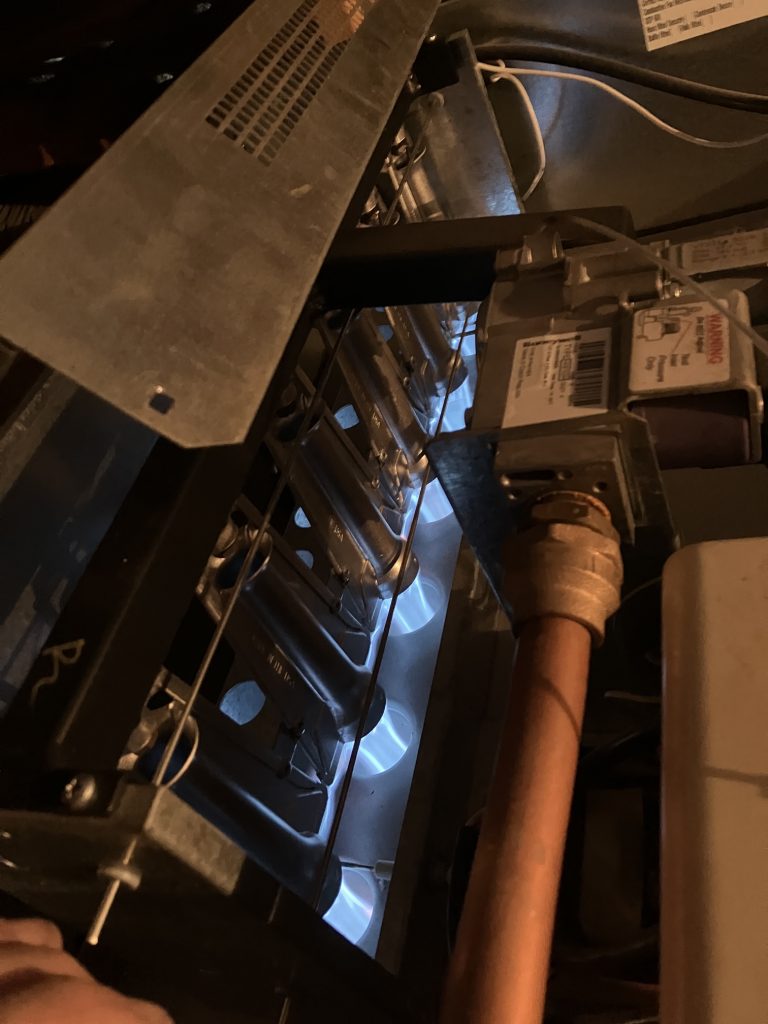
Ducted Gas Heating
Ducted gas heating remains a popular choice in Melbourne, particularly in areas with natural gas connections. A gas furnace sits in your roof space or under the floor, heating air that’s then distributed through ducts to vents throughout your home.
If you’re building a new home in Victoria, ducted gas heating is no longer an option. Under Victoria’s Gas Substitution Roadmap, Amendment VC250 to the Victoria Planning Provisions came into effect on 1 January 2024, prohibiting new gas connections for any dwelling, apartment, or residential subdivision that requires a planning permit. This legislation is part of Victoria’s commitment to reaching net-zero emissions by 2045 and transitioning households to more efficient all-electric systems.
The government estimates that new all-electric homes save around $1,000 per year compared to equivalent dual-fuel homes, or up to $2,200 with solar installed. From January 2026, any new gas connections that fall outside the ban (such as certain knockdown rebuilds that don’t trigger planning permits) now require customers to pay full upfront connection costs, making gas infrastructure even less attractive financially.
If you already have ducted gas heating, it remains a viable option to maintain, repair, or even upgrade within your existing gas infrastructure. Many Melbourne homes still run on gas heating and will continue to do so for years to come. If your current ducted gas system is working well, there’s no requirement to replace it.
However, if you’re considering whether to repair an ageing gas heater versus replacing it entirely, this is worth factoring into your decision. Reverse cycle systems offer compelling efficiency, often producing three to four units of heat for every unit of electricity consumed, and handle both heating and cooling in one system.
With gas prices increasingly volatile and the long-term trajectory pointing toward electrification, (not to mention attractive VEU rebates) many homeowners replacing old gas systems are choosing to switch to reverse cycle rather than reinvesting in gas infrastructure.
The main limitation of gas heating also is that it only heats. You’ll need a separate cooling solution for summer. This is why many existing Melbourne homes pair ducted gas heating with evaporative cooling or add-on cooling systems.
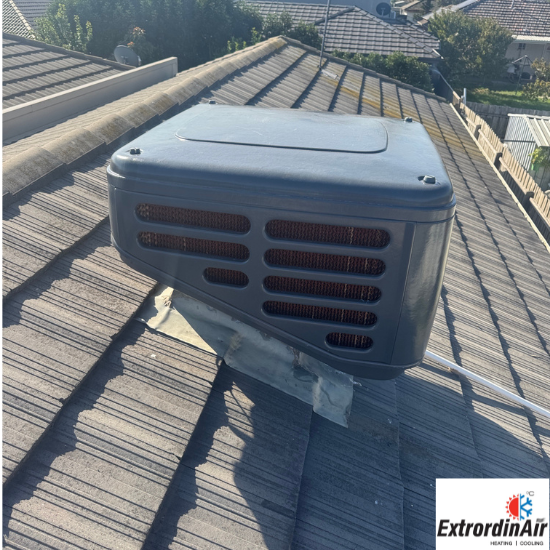
Ducted Evaporative Cooling
Evaporative cooling works on a different principle to refrigerated air conditioning. Water runs over filter pads while a fan draws hot outside air through them. The water evaporates, cooling the air, which is then distributed through your home via ducts.
The beauty of evaporative cooling is its running costs, often around one-third to one-quarter of refrigerated air conditioning. It also adds fresh air to your home rather than recirculating the same air, which many people find more pleasant.
For evaporative cooling to work well, you need to open windows slightly to allow airflow through the house. This means it’s not as effective at reaching the very low temperatures refrigerated systems can achieve, and it’s less effective on humid days when evaporation is slower. That said, Melbourne’s dry heat during most of summer makes it well-suited to evaporative cooling for much of the season.
Evaporative cooling is a popular choice alongside ducted gas heating in established homes. Gas for winter warmth, evaporative for affordable summer cooling. It’s worth considering if you prefer fresh airflow over recirculated air, or if you have a larger home where refrigerated running costs would be significant.
Choosing the Right System for Your Situation
Existing Homeowners: Upgrading or Replacing
If you’ve got an older heating or cooling system that’s on its last legs or simply not cutting it anymore, your best approach is usually to consider what’s worked and what hasn’t.
Happy with the heating but need better cooling? You might add split systems to key rooms or look at evaporative cooling if you’ve got gas heating. Tired of running multiple systems? A full ducted reverse cycle installation could simplify everything while improving efficiency.
The age and layout of your home matters too. Homes built in the 1970s through 1990s often have limited roof space, which can complicate ducted installations. Older homes without existing ductwork might find split systems or multi-head systems more practical. An assessment from a licensed installer (like the team at ExtrordinAir) will tell you what’s feasible.
New Home Builds
Building new gives you the most flexibility. You can design your home around your preferred climate control solution, running ductwork before plasterboard goes up and positioning your system for optimal efficiency.
Under Victoria’s Gas Substitution Roadmap, all new homes requiring a planning permit must be all-electric from January 2024. This means ducted reverse cycle air conditioning is effectively the default whole-home solution for new Melbourne builds. The good news is that modern reverse cycle systems are highly efficient, and the government estimates all-electric homes save around $1,000 per year on energy bills compared to equivalent gas-connected homes.
For cooling, you have the choice between reverse cycle (which handles your heating anyway) or evaporative cooling as a lower-cost-to-run alternative for summer. If you prefer the fresh airflow of evaporative cooling and want to minimise running costs on hot days, you can install both a ducted reverse cycle system for heating and shoulder-season cooling, plus evaporative cooling for the bulk of summer.
Think about how you’ll actually use your home. If you’re out during the day and only home evenings and weekends, a zoned ducted system that focuses on living areas during the day and bedrooms at night makes sense. If you work from home, factor in keeping your office comfortable year-round.
Home Renovations and Extensions
Renovations open up options that might not have been practical before. Knocking out walls or extending often means opening up ceiling spaces, making ductwork installation easier than it would be in a completed home.
If you’re doing a major renovation and your current system is tired, it’s worth incorporating heating and cooling into your renovation scope. You might extend existing ducted systems into new areas, or use the disruption as an opportunity to replace an outdated system entirely.
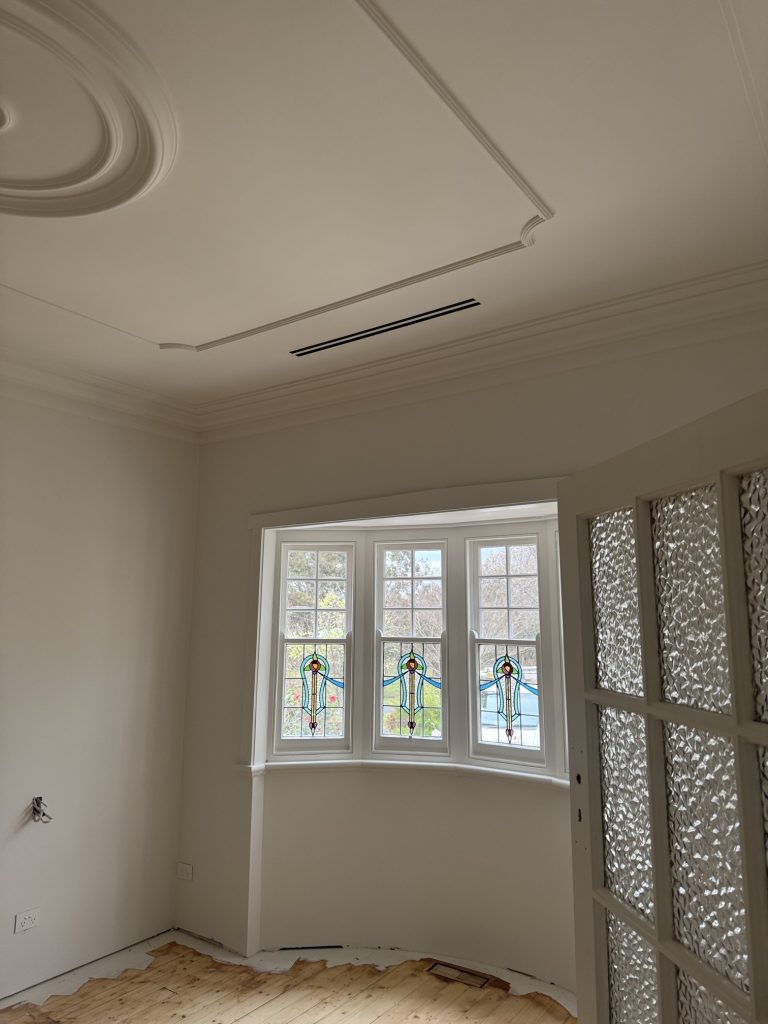
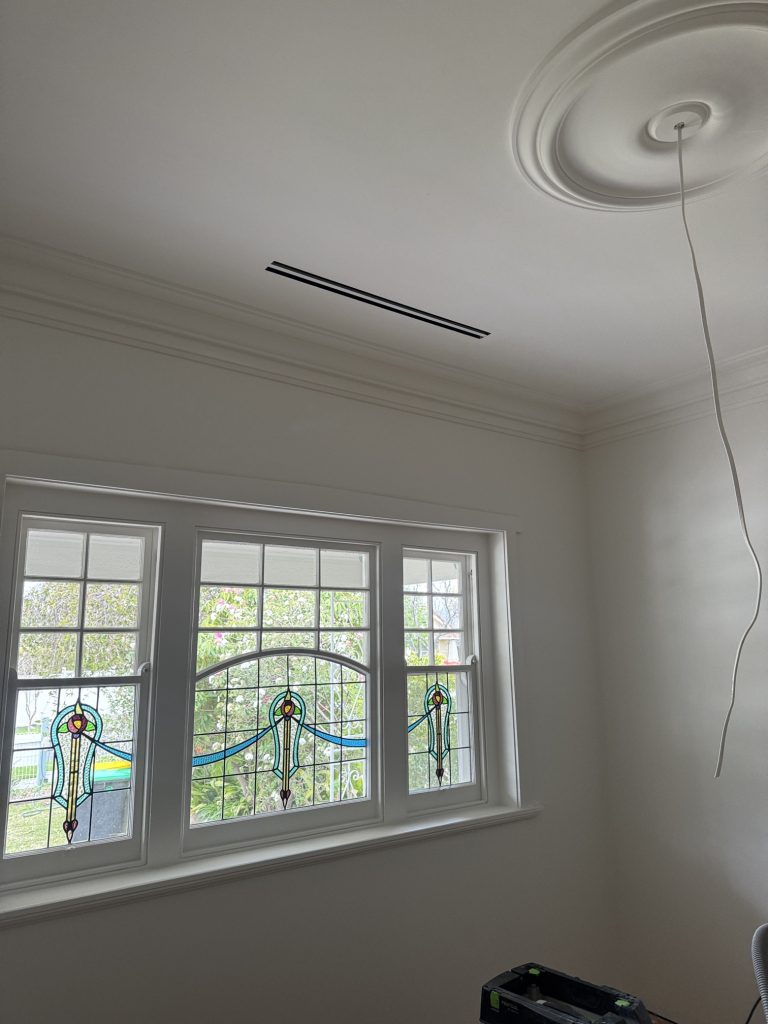
For smaller renovations or single-room additions, a split system in the new space often makes most sense, quick to install and independent of your existing setup. For larger renovations, installing ducted air conditioning makes sense. Take a look at a recent ducted air conditioning installation in Essendon, with beautiful slimline vents to complement the heritage renovation:

Landlords and Investors – Keeping Your Tenants Comfortable
Rental properties have different considerations. Tenants expect heating and cooling, but you’re balancing their comfort against your costs. Both upfront installation and ongoing maintenance.
Rental properties in Victoria are facing significant regulatory changes that directly impact heating and cooling requirements. If you own an investment property, understanding these new obligations is essential for compliance and budgeting.
New minimum energy efficiency standards
The Residential Tenancies Amendment (Minimum Energy Efficiency Standards) Regulations 2026 introduce phased requirements that will reshape how rental properties are heated and cooled:
From 1 March 2027:
- When existing heating systems permanently fail, you must replace them with an energy-efficient electric alternative. This means reverse cycle air conditioning. Gas heater replacements will no longer be permitted.
- At the start of any new lease (or conversion to a periodic tenancy), you must have energy-efficient cooling installed in the main living area. This means a fixed system with at least a 3-star rating, or a 2-star central system.
- If your property has an existing non-efficient cooling system, it must be upgraded when it reaches end of life.
From 1 July 2030:
- All rental properties must have energy-efficient cooling in the main living area, regardless of when the lease began.
Hot water systems face similar requirements. Gas systems that fail must be replaced with heat pumps or solar hot water.
What this means for your investment
If you’re currently running older gas heating or no cooling at all, you’ll need to factor upgrades into your investment planning.
The practical reality is that reverse cycle split systems or ducted reverse cycle air conditioning are now the logical choice for rental properties. A quality reverse cycle system handles both your heating obligation (which already exists under current minimum standards) and your upcoming cooling obligation in one installation.
For landlords weighing up options:
Split systems remain the most cost-effective approach for many rentals. A quality split system in the main living area meets both the heating and cooling requirements. If you’re covering bedrooms as well, a multi-head system connecting several indoor units to one outdoor unit keeps things simpler than multiple standalone systems. The downside is, if one unit fails, all units stop working.
Ducted reverse cycle makes sense for higher-end rentals or larger properties where you want whole-home climate control. The higher upfront cost is offset by the appeal to quality tenants and the simplicity of one integrated system. Zoning capability means tenants only run the areas they’re using, keeping their bills manageable.
Rebates are available through the Victorian Energy Upgrades (VEU) program to offset upgrade costs. Replacing ducted gas heating with ducted air conditioning attracts up to $5,530 in rebates in 2026. At ExtrordinAir, we apply any eligible rebates upfront to reduce your initial cost.
What to Consider When Choosing Air Conditioning for Your Home
Home Size and Layout
The size of your home directly impacts system choice. A two-bedroom apartment has completely different needs to a five-bedroom house with multiple living areas.
As a rough guide:
- Studios and one-bedroom apartments: A single split system typically handles everything.
- Two to three-bedroom homes: Multiple split systems or a multi-head system works well. Ducted becomes viable if you want whole-home coverage.
- Four-plus bedroom homes: Ducted systems really come into their own here. The efficiency of zoning and the simplicity of one integrated system outweighs the higher upfront cost for most people.
Layout matters too. Open-plan living areas are easier to heat and cool than homes with lots of separate rooms and hallways. Multi-storey homes often need careful design to ensure adequate airflow between levels.
Insulation and Building Envelope
No heating or cooling system can overcome a poorly insulated home efficiently. Before investing in a new system (or if your current system seems to struggle) check your insulation.
Melbourne homes should have insulation in the ceiling at minimum (R4.0 or higher is current standard for new builds), and ideally wall insulation as well. Seal gaps around doors, windows, and any penetrations in your building envelope. Draught-proofing is one of the cheapest improvements you can make and directly reduces how hard your system needs to work.
If you’re in an older home with limited or degraded insulation, addressing that first often makes more difference than upgrading your heating and cooling system.
Energy Efficiency and Running Costs
Energy ratings on non-ducted air conditioners changed from 2025. The old single-star Energy Rating Label is being phased out in favour of the new Zoned Energy Rating Label (ZERL), which grades a unit’s performance separately across hot, average and cold Australian climate zones.
For Melbourne households, that shift matters. Under the old label, cold-weather heating performance was effectively buried inside one all-purpose star count, so it was hard to tell whether a unit that looked efficient on paper would actually cope through a Melbourne winter.
The new label brings that information out into the open. For a walk-through of how to read the label, what the zone figures mean and how to use them to compare units side-by-side, we’ve put together a dedicated guide to aircon energy ratings for Melbourne homes.
Inverter technology has revolutionised air conditioning efficiency. Instead of switching on at full power and cycling off (like older systems), inverter units adjust their output continuously to match demand. This uses less energy and provides more consistent comfort. All quality modern systems use inverter technology. We recommend avoiding anything that doesn’t.
Running costs vary significantly between system types:
- Reverse cycle (heating): Approximately 3-4 cents per kilowatt-hour of heat output at current electricity prices.
- Gas heating: Varies with gas prices, but roughly comparable to reverse cycle in many current scenarios.
- Evaporative cooling: Approximately one-third to one-quarter of reverse cycle cooling costs.
- Reverse cycle (cooling): More expensive than evaporative but more effective on extreme heat days and humid conditions.
Your energy plan matters too. If you have solar panels, running reverse cycle heating or cooling during the day when your panels are generating makes sense. Time-of-use tariffs can influence when you run systems most economically.
Noise Levels
Modern systems are vastly quieter than older units, but noise is still worth considering, especially for bedrooms.
Indoor split system units run around 19-25 decibels on low settings (quieter than a whisper). Outdoor units are louder, typically 45-55 decibels, which is relevant if they’re near bedroom windows or neighbouring properties.
Ducted systems are generally very quiet inside the home because the noisy components are in the roof or outside. You might hear gentle airflow from vents, but that’s usually less obtrusive than a wall-mounted unit.
Evaporative coolers can be heard on the roof. Usually, a gentle hum and the sound of water. Most people tune it out quickly, but it’s worth knowing if you’re sensitive to background noise.
Aesthetics and Interior Design
If clean interior design matters to you, ducted air conditioning has a clear advantage. All you see are discreet vents in your ceiling or floor.
Modern split systems have come a long way aesthetically, with slimmer profiles and more elegant designs, but they’re still visible fixtures in your room. Multi-head systems multiply this. More rooms means more visible units.
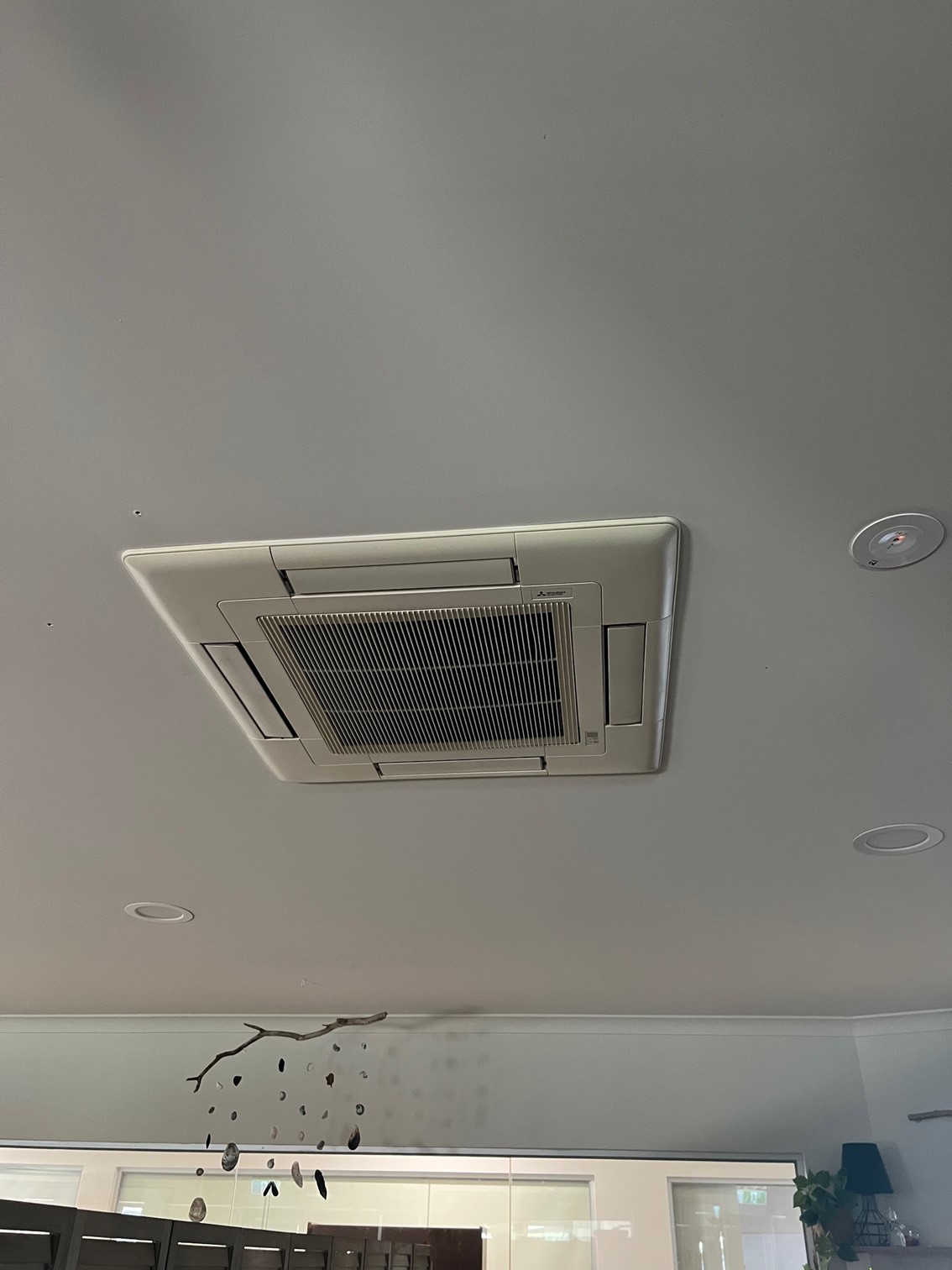
Some premium split systems can be installed as cassettes recessed into ceilings, offering a more discreet option if you want room-by-room control without wall-mounted units. These tend to be more popular in light commercial spaces, as they’re not the most attractive design:
Future-Proofing Your Home
Think about where your home might be in 10-15 years, as this is the typical lifespan of a well-maintained system.
Are you likely to extend or renovate? A ducted system can often be extended to new areas, while split systems might leave you adding more and more units over time.
Are you considering solar panels? Reverse cycle systems pair well with solar because they run on electricity. You can offset running costs with your own generation.
Gas heating remains effective, but the long-term trajectory of gas prices and the increasing push toward electrification is worth considering.
Choosing the Right Brand and Quality
Not all air conditioning systems are created equal. Cheaper units might save money upfront but often have shorter lifespans, lower efficiency, and more frequent breakdowns.
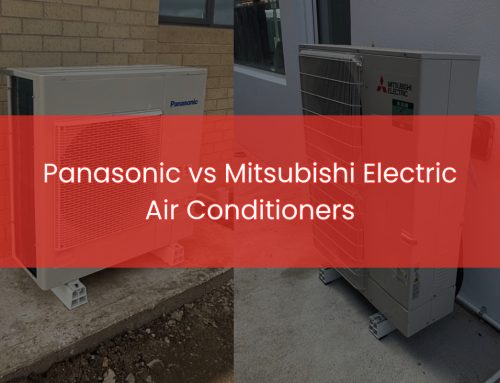
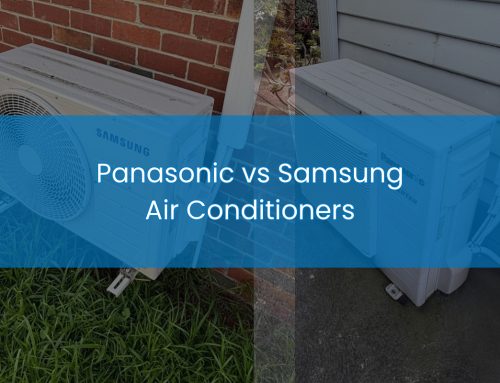
Premium brands like Panasonic, Daikin, and Mitsubishi have earned their reputations through consistent reliability, genuine energy efficiency that matches their ratings, and better build quality that stands up to Melbourne’s demands. They also tend to offer better warranty support and have readily available parts for repairs.
When comparing quotes, make sure you’re comparing like with like. A significantly cheaper quote might mean a lower-quality system. At ExtrordinAir, we have options to suit all budgets. Such as a Hisense 12.5kW ducted air conditioning installation from $6,995. Compare this to a Panasonic 18kW ducted air conditioning installation which costs from $13,795. It’s almost double the price.
But with Panasonic, you get premium Japanese engineering, and built in air purification. The Hisense system is made in China, and the reality is, it may not last as long. If you don’t plan to stay in your home 10+ years, this could be a better choice than a premium brand.
The Importance of Quality Installation
Even the best system underperforms if it’s poorly installed. Common installation problems include:
- Incorrect sizing: Systems that are too small struggle to reach comfortable temperatures and run constantly. Systems that are too large cycle on and off too frequently, wasting energy and wearing out faster.
- Poor ductwork design: For ducted systems, undersized ducts, excessive bends, or inadequate insulation all reduce efficiency and comfort.
- Incorrect refrigerant charge: Reverse cycle systems need the right amount of refrigerant. Too much or too little significantly impacts performance.
- Substandard electrical work: Air conditioning requires proper electrical supply. Cutting corners here creates safety issues and can damage the system.
Always use a licensed installer. In Victoria, air conditioning installation requires an ARCtick licence for refrigerant handling and appropriate building and plumbing licences for the work involved. Ask to see credentials before engaging anyone. At ExtrordinAir, our ARCtick licence number is AU29403 and Victorian Building and Plumbing Commission License is 43459.


What to Expect From the Installation Process
A good installation starts with a detailed assessment. At ExtrordinAir, we visit your property, measure your spaces, check your roof cavity or available installation locations, assess your electrical capacity, and discuss your needs and priorities.
You receive a written quote that clearly specifies the equipment to be installed (make and model), the scope of work, the timeline, and the warranty terms.
Installation timeframes vary by system type:
- Split systems: Usually completed in half a day to a full day.
- Multi-head systems: One to two days depending on the number of heads.
- Ducted systems: Typically two to three days for straightforward installations, potentially longer for complex homes or difficult roof access.
After installation, our installers will walk you through operating the system, explain the controls and any smart features, and provide documentation including warranty information and service recommendations.
Maintaining Your Investment
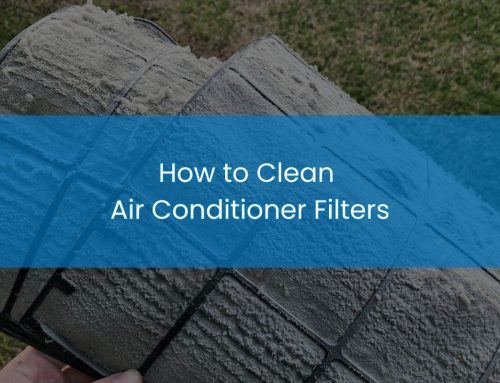
Regular air conditioning maintenance keeps your system running efficiently and extends its lifespan. Basic maintenance you can do yourself includes cleaning or replacing filters every few months (more often if you have pets or dusty conditions) and keeping outdoor units clear of leaves, debris, and obstructions.
Professional air conditioner servicing should happen annually or every two years at minimum. A service visit typically includes checking refrigerant levels, cleaning coils, inspecting electrical connections, and ensuring everything is operating as it should. Many issues caught early during servicing are simple fixes. Left unaddressed, they become expensive problems.
For ducted systems, having your ductwork inspected every few years is worthwhile. Ducts can develop leaks, insulation can degrade, and pests can occasionally cause damage.
Your Rights and Protections for Large Air Conditioning Installations in Melbourne
In Victoria, domestic building work over $10,000 (including heating and cooling installations) requires a written major domestic building contract. This contract must include details about the work, the price, the timeline, and warranties.
Victorian law provides a minimum six-year warranty on domestic building work, covering defects in workmanship and materials. This is separate from any manufacturer warranty on the equipment itself. Quality installers stand behind their work and welcome these protections. At ExtrordinAir, we send you your compliance certificate and warranty information after the installation.
Are You Ready to Find The Perfect Heating and Cooling System for Your Melbourne Home?
Choosing the right heating and cooling system is a significant decision, but it doesn’t have to be overwhelming. Start by understanding your home’s needs and your priorities, then get advice from qualified professionals who can assess your specific situation.
At ExtrordinAir Heating and Cooling, we’ve been helping Melbourne homeowners find the right solutions for over 20 years. We’re premium Panasonic and Bonaire dealers, fully licensed (ARCtick AU29403, VBPC 43459), and we stand behind every installation with a comprehensive six-year guarantee.
Based in Airport West, we service homes across Melbourne’s north, west, and surrounds. Whether you’re after a single split system, a multi-head setup, full ducted air conditioning, gas heating, or evaporative cooling, we can assess your home, explain your options, and deliver an installation that performs exactly as it should.
Complete our form below to get a free quote, or give our Melbourne office a call on 1800 959 884 to arrange a no-obligation home assessment. We’ll help you find the heating and cooling solution that fits your home, your lifestyle, and your budget.

20 Years
Experience

Professional
and Licensed

24 Hour
response time

Parts and labour
Guaranteed

Residential
& Commercial

Service
Melbourne Wide

No hidden
Cost

Clean Installation
Service