Panasonic vs Mitsubishi Electric Air Conditioners
Panasonic and Mitsubishi Electric are two of the most trusted names in reverse cycle air conditioning, and both make excellent choices for Melbourne homes. The right pick comes down to what matters most in your house: quiet winter nights, lower heating bills, or cleaner air all year.
As leading Panasonic dealers, we know that range inside out. We also have plenty of respect for Mitsubishi Electric, and where it comes out on top, we’ll say so. If Daikin is also on your shortlist, read our Panasonic vs Daikin comparison.
One quick tip before you compare quotes: Mitsubishi Electric and Mitsubishi Heavy Industries are two separate companies.
Table of Contents
Panasonic vs Mitsubishi Electric – A Quick Comparison
Here’s how the main premium wall splits compare:
| Panasonic HZ | Panasonic Z | Mitsubishi Electric AP | Mitsubishi Electric LN | |
|---|---|---|---|---|
| Sizes | 2.5 to 8 kW | 2.5 to 9.5 kW | 2.5 to 7.8 kW | 2.5 to 6 kW |
| Cold zone heating stars (3.5 kW) | 3 | 2.5 | 3 | 3 |
| Air purification included | nanoe X Mark 2 | nanoe X Mark 1 | Air Purifying Filter and Anti-Allergy Enzyme Filter | Plasma Quad Plus Filter |
| Standout extra | Humidity sensor | Largest wall split sizes | Quietest heating, as low as 18 dB | 3D i-See sensor |
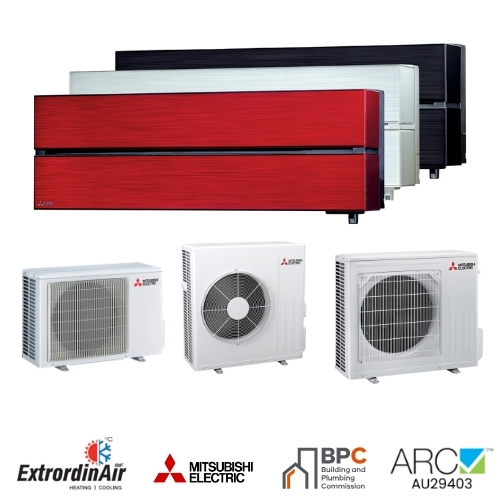
| Colours | White | White | White | Pearl White, Ruby Red, Onyx Black |
Panasonic’s RZ Series and Mitsubishi Electric’s GS Series are lower range models with simpler filters and fewer smart features. We aren’t comparing those models in this post.
Choosing the right size
Both brands offer wall hung split systems from 2.5 kW (ideal for a small bedroom), up to 9-9.5 kW for a large open plan living area. The right size depends on floor area, ceiling height, insulation and windows, so we size every system after seeing your home. Our split system size chart walks you through things to consider when sizing an air conditioner.
Our Recommendations at a Glance
| Your situation | Our pick | Why |
|---|---|---|
| Main living area heated every evening | Panasonic HZ | Top cold zone heating rating, stronger nanoe X and humidity control |
| Large open plan living | Panasonic Z | The largest wall split in either range, with nanoe X built in |
| Light sleeper's bedroom | Mitsubishi Electric AP | The quietest heating and a Night Mode made for sleep |
| Tiny study, nursery or above a doorway | Mitsubishi Electric AP Mini | 2 kW and only 250 mm tall |
| Hay fever, bushfire or wood heater smoke | Mitsubishi Electric LN | Plasma Quad Plus captures pollen and fine smoke particles |
| Pets, cooking smells and soft furnishings | Panasonic HZ or Z | nanoe X reaches fabrics and surfaces, with nothing to replace |
| Muggy summer days | Panasonic HZ | Humidity sensor keeps the room below 60% humidity while cooling |
| Rooms that often sit empty | Mitsubishi Electric LN | Absence detection switches to energy saving automatically |
| Several rooms on one outdoor unit | Panasonic | nanoe X in every Z Series indoor unit |
| Whole home ducted | Panasonic | nanoe X Mark 3 built into the NX ducted range |
| Already own a Mitsubishi Electric system | Plasma Quad Connect | Adds plasma purification to compatible existing units |
| Coastal and bayside homes | Either | Both use Blue Fin anti corrosion treatment on outdoor coils |
| Warranty | Either | Five years parts and labour from both |
Best for a main living area: Panasonic HZ
Melbourne is in the cold zone on Australia’s energy rating label, so cold zone heating stars matter most for a lounge you warm every winter evening. At 3.5 kW, the Panasonic HZ earns 3 stars. That matches Mitsubishi Electric’s best and sits half a star above Panasonic’s own Z Series.
The HZ then adds two things Mitsubishi Electric can’t match in this size. Its nanoe X Mark 2 generator releases twice as many hydroxyl radicals as the Z Series (9.6 trillion a second against 4.8 trillion), working on sofas, curtains and rugs as well as the air. Its humidity sensor keeps the room below 60% relative humidity while cooling, so sticky February evenings feel fresher at the same temperature.
Good to know: The AP Series earns the same 3 cold zone stars at 3.5 kW and makes a strong value pick. At 5 kW, Panasonic Z and Mitsubishi Electric AP and LN all carry 2 cold zone stars, so features become the tiebreaker.
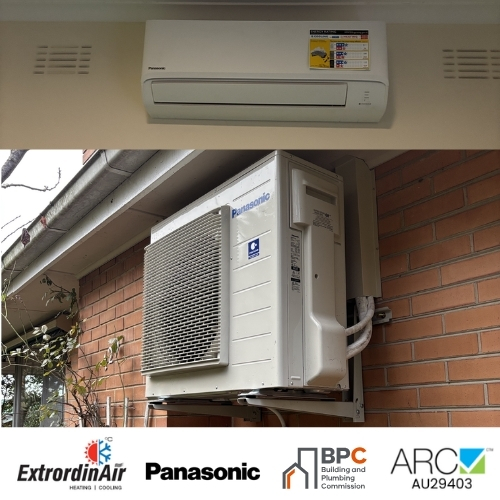
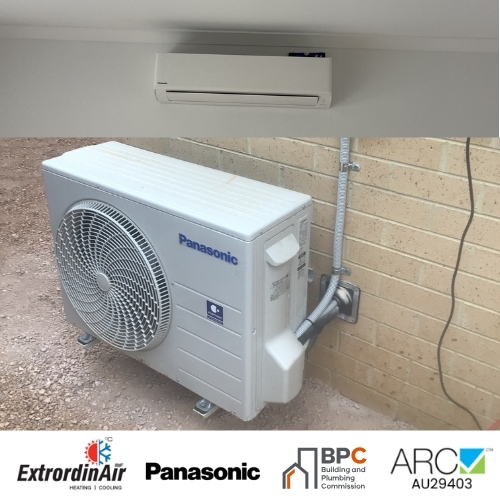
Best for large open plan living: Panasonic Z Series
For a big open plan kitchen, dining and living space, the Panasonic Z Series goes up to 9.5 kW cooling and 10.3 kW heating in a single wall unit, with nanoe X built in. Mitsubishi Electric’s AP Series largest model is 7.8 kW.
One larger unit means one outdoor unit, one set of pipes and one service visit, which keeps the installation simple and tidy.
Consider also: Mitsubishi Electric has a 9 kW AS90 model. This capable alternative has long and wide airflow and advanced filtration designed for large living areas.
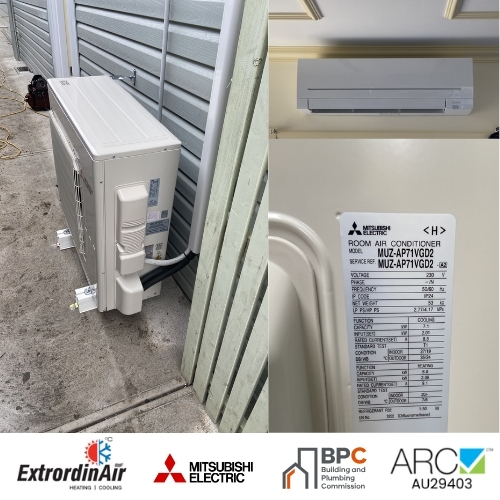
Best for a light sleeper’s bedroom: Mitsubishi Electric AP
If you run the heating overnight and wake at the slightest sound, the Mitsubishi Electric AP has the slight noise advantage. The 2.5 kW model heats as quietly as 18 dB, below the 21 dB of Panasonic’s equivalent Z Series.
Its Night Mode is designed around sleep. It dims the display light, switches off the beeps and quietens the outdoor unit by up to 3 dB, which helps when the condenser sits near a bedroom window. At 2.5 kW, the AP model also has 3 cold zone heating stars, and its standard Anti-Allergy Enzyme Filter traps pollen and other allergens while you sleep.
Where Panasonic shines: a Panasonic HZ brings nanoe X to bedding and curtains, and it can keep purifying with the heating switched off.
Best for hay fever and smokey days: Mitsubishi Electric LN
When the main goal is pulling pollen and fine smoke particles out of the air, the Mitsubishi Electric LN is our pick. Its Plasma Quad Plus Filter captures particles as small as PM2.5, the size found in smoke from bushfires and wood heaters.
The LN has some clever extras too. Its 3D i-See sensor reads the room’s temperature in sections and sends air where it’s needed. When nobody is home, it switches to energy saving on its own. The 2.5 kW model can also turn down to just 0.7 kW of heating, about half the AP’s minimum, for steady, gentle warmth in a small, well insulated room. And it comes in Pearl White, Ruby Red or Onyx Black.
Choose Panasonic when: you want year round air purification without needing heating or cooling. Nanoe X keeps working on pollen that settles on surfaces, and it can run on its own on those mild spring days when the heating is off. Nanoe X technology is also approved by the National Asthma and Council Australia’s Sensitive Choice program.
Best for multi split systems: Panasonic
A multi split system installation connects several indoor units to one outdoor unit, freeing up outdoor space. Panasonic gets our nod because each Z Series indoor unit brings nanoe X into its own room.
Good to know: If you have Nanoe X running on its own in one room (without heating or cooling), if another room is using the heating, it will pause the Nanoe X running on its own. It carries on as normal in the room doing the heating.
About Mitsubishi Electric Multi Splits: its MXZ multi split range pairs with AP indoor units, so each room gets the AP’s quiet operation and standard filters. In winter, set every active room to HEAT (rather than using the auto setting) mode so all the rooms work together smoothly.
With either brand, all indoor units share the outdoor unit’s capacity. We size the system around the rooms you use at the same time.
Best for ducted: Panasonic
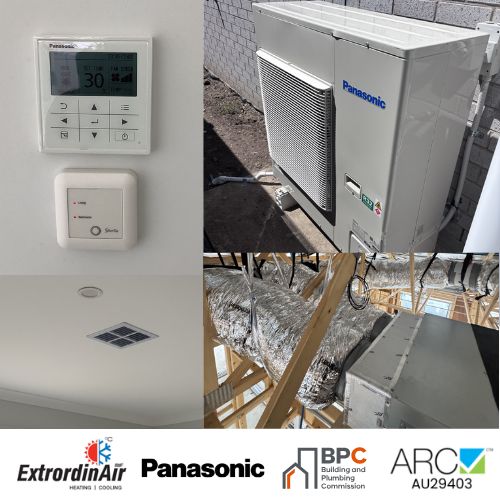
For whole home comfort, Panasonic’s NX ducted range carries nanoe X Mark 3 through the ducts to every room. It also manages the temperature of the air leaving the outlets, designed to keep heating airflow comfortably warm.
When to consider Mitsubishi Electric: some of its ducted outdoor pairings run at a lower minimum output, which keeps things efficient when only one or two zones are open. Plasma Quad Connect is also available for compatible ducted models.
Whichever brand you choose, zoning, outlet placement and service access shape how comfortable your home feels. We explain more about how ducted air conditioning works in this post.
Running costs are similar between Panasonic and Mitsubishi
For a small sized 3.5 kW air conditioner suitable for a small living space or bedroom, the running costs are around 22-23 cents per hour for a 3 star efficiency air conditioner.
This assumes you have the air conditioner set at a mild temperature point (usually around 18°C in winter and 24°C in summer), and uses an average of 25.96 cents per kWh in electricity costs.
On a mild day, the Panasonic HZ is the cheapest to run by a whisker. For a lounge or bedroom heated through winter, choose 3 cold zone stars if you can for the best efficiency.
Both Panasonic and Mitsubishi Electric offer air purification, but they work slightly differently
For everyday, whole room air purification, Panasonic takes the win. Nanoe X comes built into every HZ and Z Series wall split. It uses tiny water particles to help reduce odours and inhibit selected airborne pollutants, and the generator never needs replacing.
Even better, Nanoe X can run on its own while heating and cooling are switched off. Your air conditioner becomes a year round air purifier, including those mild spring days when pollen is high but temperatures are moderate.
Mitsubishi Electric offers a range of different filters across its air conditioners, all of which are impressive. They include:
- Air Filter: a primary filter designed to trap dust and inhibit mould growth.
- Nano Platinum Filter: designed to inhibit up to 81% of the Influenza A virus, up to 99% of Staphylococcus aureus and E. coli, plus mould and household odours.
- Air Purifying Filter: designed to inhibit up to 92% of the Influenza A virus, up to 98% of Staphylococcus aureus, 99% of Klebsiella pneumoniae and 91% of E. coli, plus mould and household odours.
- Plasma Quad Plus Filter: inhibits up to 99% of the Influenza A virus and Staphylococcus aureus. It reduces PM2.5 particles from cigarette smoke by up to 90%, rising to 99% with longer running times, and inhibits up to 98% of airborne allergens (cat allergen and pollen) in a single pass. Up to 99% of mould and dust particles are also inhibited. It comes standard in the LN Series, and the Plasma Quad Connect add on brings the same technology to compatible wall mounted, cassette and ducted units, including existing installations.
- Anti-Allergy Enzyme Filter: inhibits up to 99% of the Influenza A virus, adsorbs up to 98% of tick antigens and 99% of pollen, and inhibits up to 99% of Staphylococcus aureus and E. coli within 18 to 24 hours of testing.
- Electrostatic Anti-Allergy Enzyme Filter: the same protection as the Anti-Allergy Enzyme Filter, with charged fibres that attract up to three times more dust.
Many models pair a primary Air Filter or Nano Platinum Filter with a more advanced filter as standard. The AP Series, for example, includes both the Air Purifying Filter and the Anti-Allergy Enzyme Filter. The anti-allergy filters are also optional extras on some models. Choose based on the bacteria, viruses or allergens you most want to reduce.
The closest option to Panasonic’s nanoe X is the Electrostatic Anti-Allergy Enzyme Filter, an optional add on for the AP and EF Series.
What we like about Panasonic’s nanoe X is that the particles fill the room to reach and inhibit pollutants on surfaces and fabrics, rather than waiting for pollutants to travel to the air conditioner’s filter.
Panasonic continues to develop nanoe X. The Mark 2 generator in the HZ Series releases twice as many hydroxyl radicals as the Mark 1, and Mark 3 now features in its ducted range. Learn more about nanoe X on the Panasonic website.
Warranty, servicing and coastal protection
Panasonic and Mitsubishi Electric both offer a five year parts and labour warranty on residential air conditioners, subject to their terms. On top of that, our work is backed by a six year installation guarantee under Victorian Building and Plumbing Commission.
Both brands treat their outdoor coils with Blue Fin anti corrosion coating, good for homes near the Yarra River and Maribyrnong Rivers.
A simple care routine keeps either brand running well:
- Both brands: clean the main dust filters every two weeks during regular use, and book a professional service once a year.
- Panasonic: the nanoe X generator is maintenance free.
- Mitsubishi Electric: wash the Anti-Allergy Enzyme Filter and Plasma Quad filters every three months, and replace the Anti-Allergy Enzyme Filter every 12 months for best performance.
We also position every unit so its filters are easy and safe to reach.