Why Is My Air Conditioner Leaking Water? A Melbourne Homeowner’s Guide
A leaking air conditioner is one of the most common call-outs we handle at ExtrordinAir, and the good news is that most causes are straightforward to diagnose and fix.
Your reverse cycle air conditioner doesn’t just cool the air, it removes moisture from it. As warm, humid air passes over the cold evaporator coil inside your indoor unit, condensation forms on the coil’s surface. This condensation drips into a tray, which channels the water through a condensate drain pipe that carries it safely outside your home. On a humid Melbourne day, a single split system can produce several litres of water per hour. That’s normal. For more information, read our guide to learn more about how refrigerated air conditioning works.
The trouble starts when something interferes with this drainage process. When the water can’t flow where it’s supposed to, it ends up where it shouldn’t, like your walls, ceiling, or floor.
In this guide, we’ll walk you through why your air conditioner is leaking water, and when to call our team for air conditioning repairs.
Table of Contents
- Common Reasons Your Air Conditioner Is Leaking Water
- What Looks Normal
- Leaking Water in Ducted Air Conditioning Systems
- Leaking Water in Multi-Head Air Conditioning Systems
- A Note on Rooftop Evaporative Cooling
- What Happens If You Ignore a Leaking Air Conditioner?
- What to Do If Your Air Conditioner Is Leaking
- Frequently Asked Questions
- Preventing Air Conditioner Leaks: Maintenance Matters
Common Reasons Your Air Conditioner Is Leaking Water
Blocked Condensate Drain Line
Over time, the condensate drain line collects dust, debris, mould, and even algae. In Australian homes, we also see some unwelcome tenants! Geckos, wasps, and spiders love to nest in outdoor drain pipes, creating blockages that stop water from escaping.
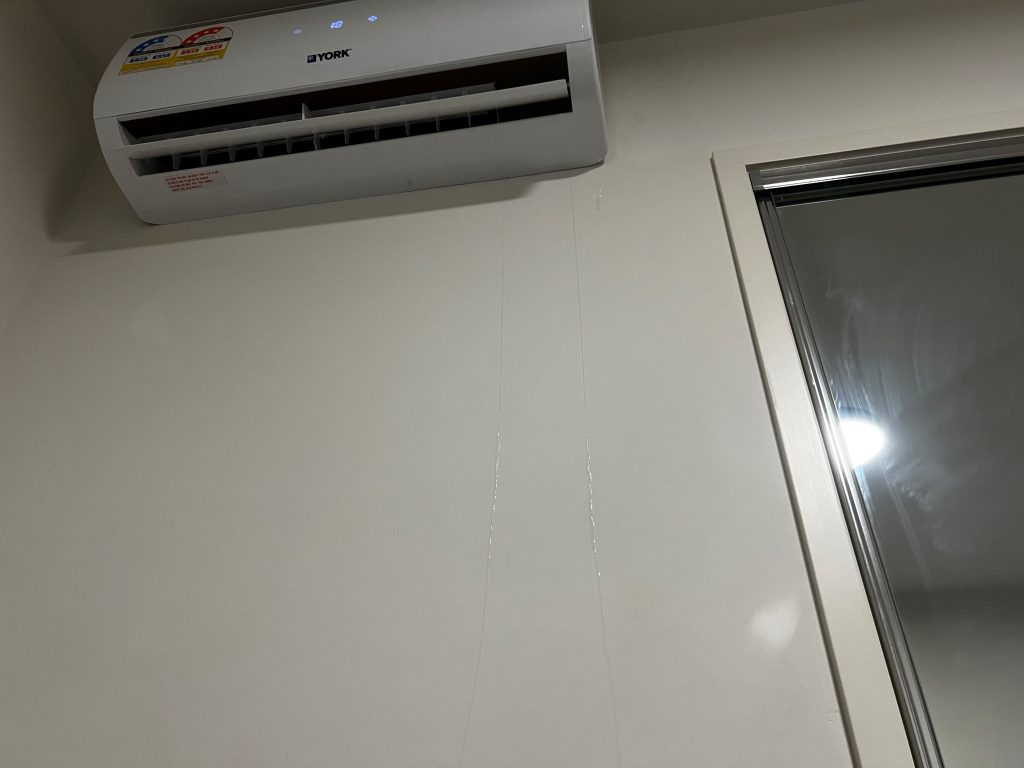
When the drain line is blocked, water backs up into the drain pan and eventually overflows into your home. For split systems, you may see water running down the wall beneath the indoor unit, often on the right-hand side. For ducted systems, the overflow ends up in your roof cavity, which can lead to ceiling stains and water damage.
A qualified HVAC technician can clear the blockage using compressed air or a vacuum, and flush the line with a solution to kill off mould and prevent regrowth. Regular split system servicing is the best way to prevent this from happening in the first place.
Split systems can also leak if the connection between the indoor unit and the drain pipe loosens over time, or if the drain pipe itself develops a kink or crack behind the wall where it’s harder to spot. Pay attention to any dripping sounds behind the unit, or dampness and mildew forming on the wall around it, these are early warning signs that something isn’t right.
Dirty Air Filters
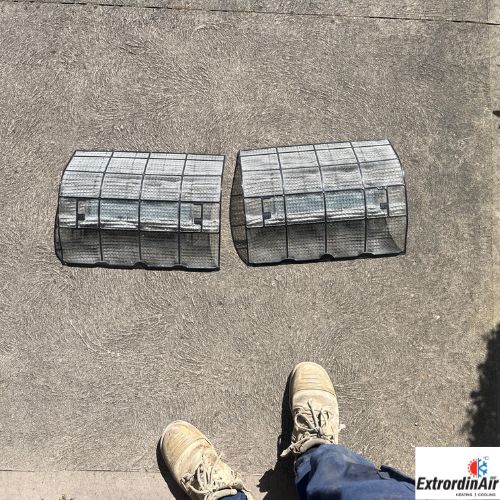
Your air filter is there to catch dust and particles before they reach the evaporator coil. When the filter gets clogged airflow to the coil becomes restricted. This happens faster when you have pets, live near a building site or major road, or a windy area and have the windows open.
Reduced airflow causes the evaporator coil temperature to drop below freezing, and ice starts forming on the coil. When your system cycles off and the ice melts, the sudden rush of water can overwhelm the drain pan and spill out as a leak.
The fix is simple: clean your air conditioner filters regularly. We recommend checking them every four to six weeks during heavy use periods (December through March in Melbourne) and giving them a gentle wash under the tap. This one habit alone can prevent a surprising number of breakdowns and keep your air conditioner running efficiently.
Frozen Evaporator Coil
A frozen evaporator coil isn’t always caused by dirty filters. Low refrigerant levels, restricted airflow from blocked vents or ductwork issues, or even running your system at an extremely low temperature setting can all cause ice to build up on the coil.
When the ice eventually thaws, the volume of water produced can be more than your drainage system is designed to handle. If you notice ice on the coil or your system is blowing warm air instead of cold, switch it off and call a licensed technician. Refrigerant handling in Australia is restricted to technicians who hold an ARCtick licence. It’s not something you can top up yourself, and there are hefty fines for unlicensed handling.
Damaged or Corroded Drain Pan
The drain pan sits beneath the evaporator coil and catches all that condensation before directing it to the drain line. Over time (particularly in systems older than 10 to 15 years) the pan can develop cracks, rust spots, or corrosion that allows water to drip straight through before it reaches the drain.
Melbourne’s temperature swings, from 15°C mornings to 40°C afternoons in a single day, accelerate material wear on these components. While a small crack can sometimes be patched with a waterproof sealant as a temporary measure, replacement is the more reliable long-term solution.
Faulty Condensate Pump
Not every air conditioner can rely on gravity alone to drain condensation. If your indoor unit is installed in a location where the drain can’t run downhill to an exit point a condensate pump is used to push the water out.
When the pump fails, water has no way to escape and simply backs up into the drain pan until it overflows. Pumps can fail because the motor burns out, the float switch gets stuck, or debris clogs the pump inlet. You might notice the pump making unusual clicking or humming sounds, or no sound at all when the system is running — both are signs something isn’t right. A licensed technician can test, repair, or replace the pump, and it’s a component that should be checked during every routine service.
Poor Installation
If your air conditioner wasn’t installed correctly, drainage problems can show up from day one. A split system indoor unit needs to be mounted level, with the drain line angled downward toward the exit point. If the unit is tilting the wrong way, or if the drain pipe doesn’t maintain a continuous downward slope, condensation pools inside and eventually overflows.
For ducted systems, the pitch of the drain pipe running through your roof space is critical. Even a small sag or an incorrectly routed pipe can create a low point where water collects instead of draining.
At ExtrordinAir, we back every installation with a 6-year guarantee and hold both an ARCtick licence (AU29403) and Victorian Building Plumbing Commission licence (43459), so you can be confident the job is done right.
What Looks Normal
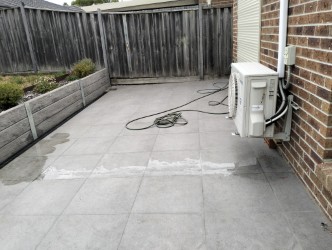
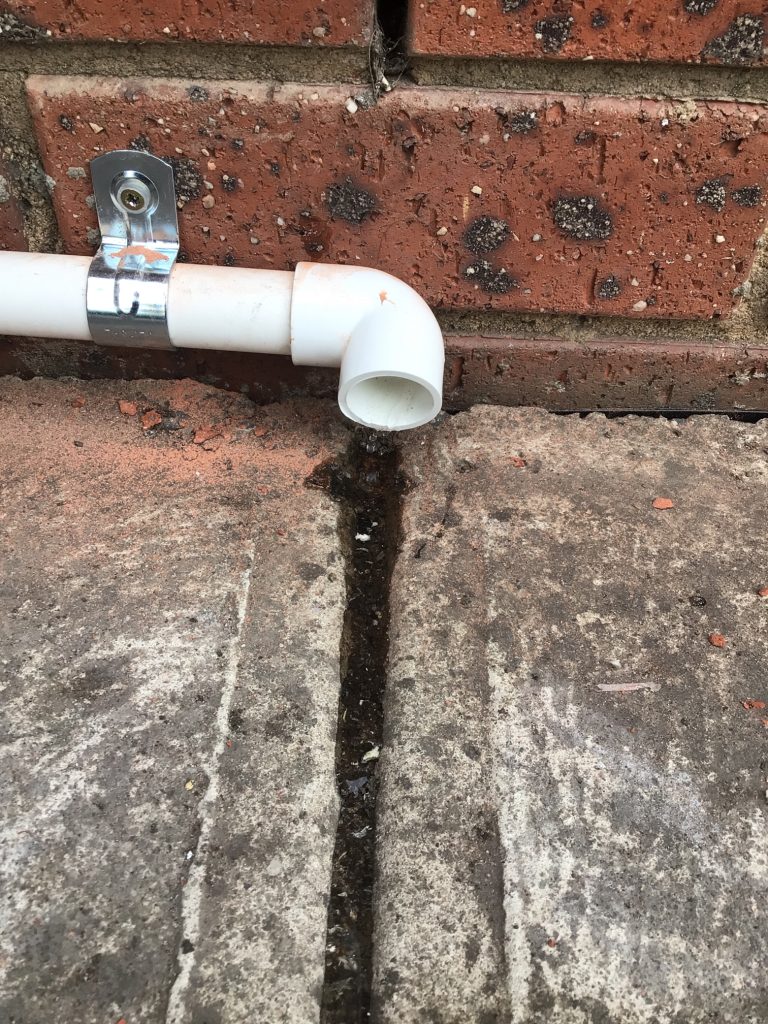
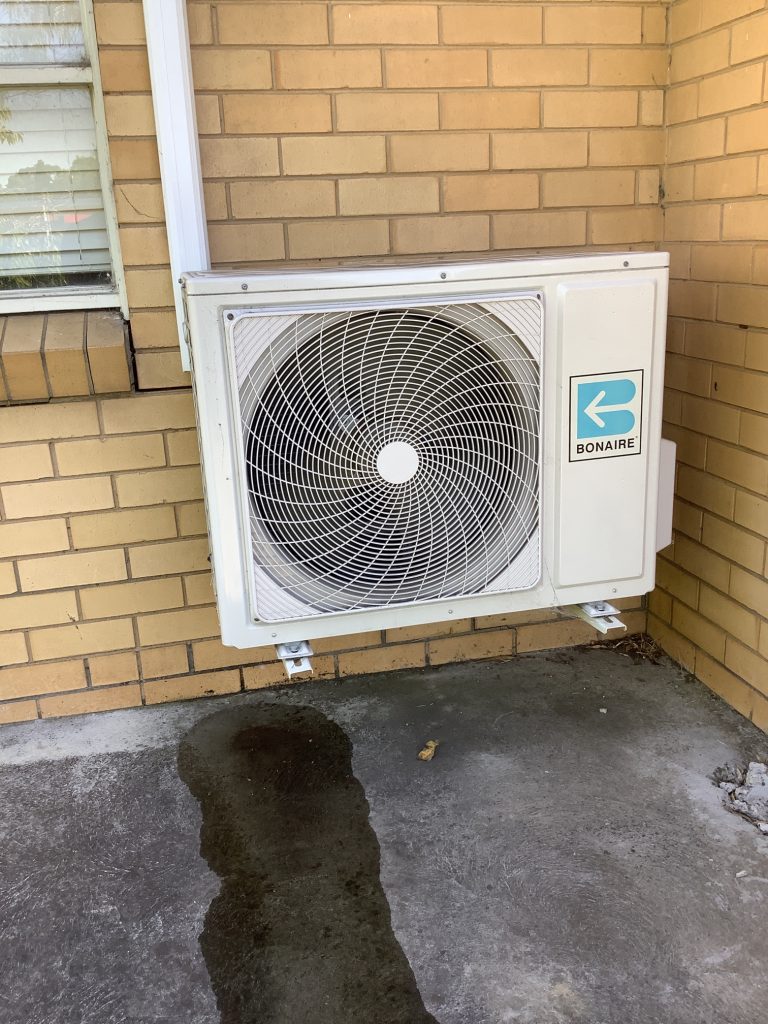
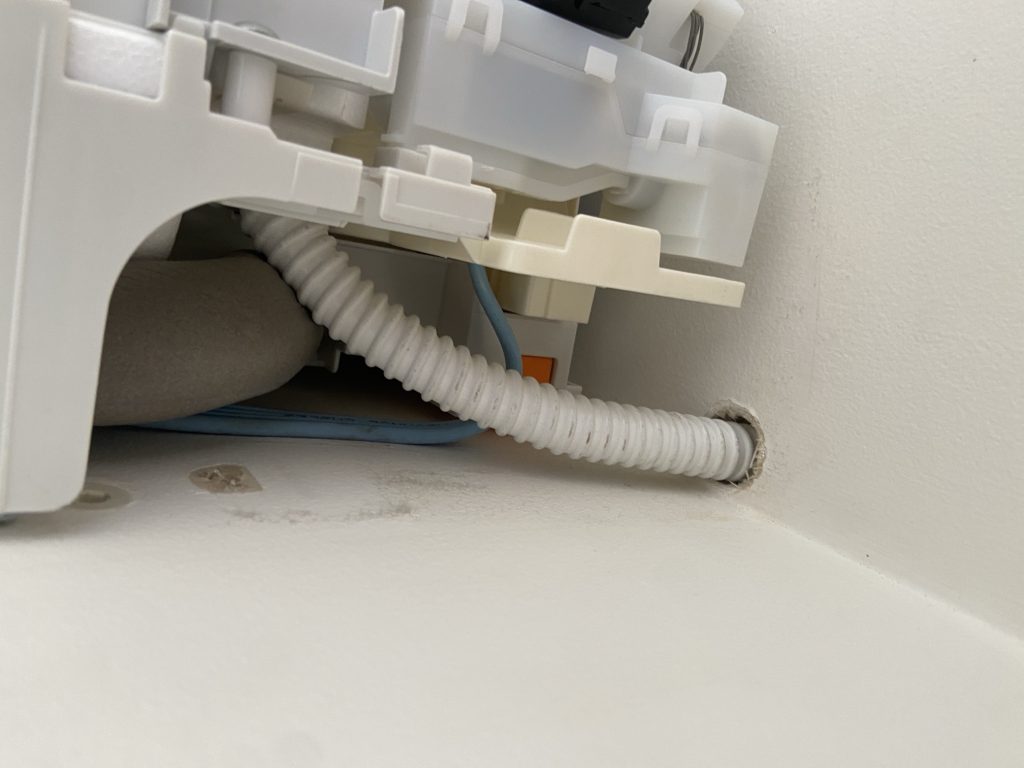
Here are some images of water coming from condensate drains in different circumstances. These are all normal looking water flow.
Leaking Water in Ducted Air Conditioning Systems
Ducted systems present a different challenge because the indoor unit is hidden in your roof cavity, out of sight and often out of mind. By the time you notice a leak (usually as a brown stain spreading across the ceiling or water dripping from a vent) the problem may have been developing for weeks.
The condensate drain in a ducted system typically runs from the indoor unit through the roof space and into your home’s external guttering or a dedicated drain point. If this pipe becomes blocked or develops a leak at a joint, water accumulates in the safety tray installed beneath the unit. If the safety tray drain is also compromised, water overflows onto your ceiling.
Insulation plays a major role in ducted system health. The refrigerant pipes that run through your roof cavity are cold, and in a hot, humid roof space, condensation will form on any uninsulated surface. If the pipe insulation has degraded, come loose, or was never installed properly, you’ll get moisture dripping directly onto your ceiling — a problem that has nothing to do with the drain at all.
Leaking ductwork is another hidden culprit. If there are gaps or tears in your ductwork, warm humid air from the roof cavity gets sucked into the system and mixes with the cold air inside the ducts. This creates condensation within the ductwork itself, which can drip down through vents and onto your walls and ceilings. A ducted air conditioning service will identify and repair these issues before they cause lasting damage.
Leaking Water in Multi-Head Air Conditioning Systems
Multi-head (or multi-split) systems connect multiple indoor units to a single outdoor compressor. While each indoor head operates much like a standard split system, the added complexity of multiple drain lines, longer refrigerant pipe runs, and more connection points creates additional opportunities for leaks.
Each indoor head has its own condensate drain, and if even one of those drains develops a blockage, that room’s unit will start leaking while the others continue working fine. Because the outdoor unit is shared, low refrigerant affects every indoor head simultaneously. If you notice multiple units icing up or leaking at the same time, a refrigerant issue is likely.
The longer pipe runs common in multi-head installations also mean more insulation to maintain and more joints where small leaks can develop over time. Annual servicing is particularly important for multi-head split systems to check every drain line, inspect insulation along each pipe run, and ensure refrigerant pressure is within the correct range.
A Note on Rooftop Evaporative Cooling
If you have a rooftop evaporative cooling system, the way your system uses water is fundamentally different from a reverse cycle air conditioner.
Evaporative coolers work by drawing hot air through water-soaked filter pads. As the water evaporates, it cools the air, which is then blown through ductwork into your home. These systems are connected directly to your mains water supply and use a float valve to maintain the correct water level in the sump. It is normal for them to dump water.
If you notice water streaming down the roof or overflowing from your gutters, then you have a problem.
Water leaks from evaporative coolers are usually caused by:
- A faulty float valve that doesn’t shut off properly, allowing the sump to overflow
- A damaged or worn-out water pump
- Clogged filter pads
- Stuck dump valve (the mechanism that periodically flushes stale water to prevent mineral buildup)
It’s important to have your evaporative cooler professionally serviced before summer each year. Neglecting this annual service is one of the most common reasons we see roof damage and ceiling stains from evaporative systems.
If you’re not using your evaporative cooler over winter, draining the system down and turning off the water supply helps prevent frozen pipes and keeps internal components from deteriorating in the off-season.
What Happens If You Ignore a Leaking Air Conditioner?
It’s tempting to put a towel under the drip and deal with it later, but leaving an air conditioner leak unattended can escalate quickly.
Mould and mildew growth is the most immediate health concern. Persistent moisture creates the perfect breeding ground for mould, which affects indoor air quality and can trigger respiratory issues, particularly for people with asthma or allergies. Some types of mould are harmful to humans and pets, and once established, professional remediation may be needed.
Structural damage is the other big risk. Water leaking into ceiling cavities softens plasterboard, stains paint, and can encourage pests such as termites. In severe cases, a waterlogged ceiling can collapse.
Higher energy bills are the quieter consequence. A system that’s leaking due to a frozen coil, dirty filter, or low refrigerant is working harder than it should, drawing more power and delivering less comfort.
What to Do If Your Air Conditioner Is Leaking
If you spot a leak, here’s what to do straight away:
Switch off the system. This stops the unit from producing more condensation and gives you a chance to assess the situation safely, away from any electrical hazard.
Mop up standing water. Minimise damage to flooring and walls by soaking up pooled water as quickly as possible.
Check the air filter. Pull it out and inspect it. If it’s visibly clogged with dust, give it a wash under running water and let it dry completely before putting it back.
Look at the drain line. If you can see the external drain pipe (usually a small PVC pipe on the outside wall), check whether water is flowing freely when the system is running. If nothing is coming out, it’s likely blocked.
Call a licensed technician. If the problem persists, or if you suspect a refrigerant leak, frozen coil, or ducted system issue, it’s time to get professional help. Some of these problems require specialised tools and a licensed technician to resolve safely and legally.
Frequently Asked Questions
Why Does My Aircon Drip Water?
Your air conditioner drips water because removing humidity is a core part of how it cools your home. As warm air passes over the cold evaporator coil, moisture in the air condenses into water droplets. A small amount of water dripping from the outdoor drain hose while the system is running is completely normal and is a sign that everything is working as it should.
Can Air Conditioner Water Be Used?
The condensate from your air conditioner can be used for watering garden plants, cleaning outdoor furniture, washing windows, or topping up decorative water features. It is not safe to drink.
Is Water That Drips from an Aircon Distilled?
No. Unlike water produced in a controlled laboratory distillation process, air conditioner condensate can contain traces of whatever is floating around in your indoor air, including dust particles, bacteria, and organic matter. It may also pick up small amounts of metal from the evaporator coil and drain components. It is not safe for medical, laboratory, or drinking purposes.